
If you’re searching for Medieval Paris, you’re probably hoping for narrow cobblestone lanes, timber-framed façades, and the kind of streets that feel older than the city around them. This self-guided walk strings together Paris’s most medieval-feeling corners, from the Left Bank’s scholastic heart to the Marais and a rare surviving medieval tower. You’ll get a simple route, what to look for at each stop, and a few easy detours if you want more.
What you’ll learn today
- A practical Medieval Paris walking route you can do on your own
- Where to find timber-framed houses (including Nicolas Flamel’s)
- The best medieval streets, cloisters, and city-wall remnants that still exist
- How to connect medieval Paris to the Latin Quarter’s “medieval academia” story
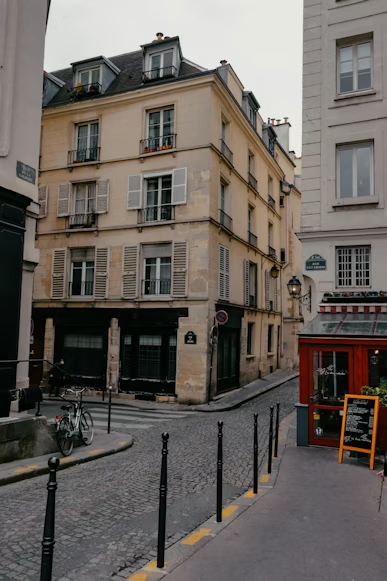
Medieval Paris walk: the quick route overview
This Medieval Paris walk is easiest done in one direction, starting on the Left Bank and finishing on the Right Bank.
Suggested route order (about 4–6 km / 2.5–3.5 miles, depending on detours):
- Musée de Cluny area (Latin Quarter)
- Saint-Julien-le-Pauvre + nearby medieval-feeling lanes
- Île de la Cité: Notre-Dame area, then Sainte-Chapelle (exterior or ticketed visit)
- Cross into the Marais: Rue François Miron timber houses
- Cloître des Billettes (quiet medieval cloister)
- Nicolas Flamel’s house (rue de Montmorency)
- Tour Jean-sans-Peur (medieval residential tower)
- Optional: Wall of Philip Augustus remnants near rue des Jardins-Saint-Paul
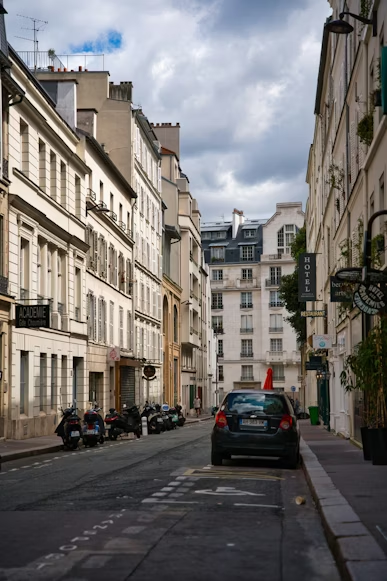
Before you go (so it’s actually enjoyable)
A medieval hunt is more fun when you plan for modern Paris.
- Shoes: cobbles can be slick when wet, wear shoes with grip.
- Best timing: mornings are calmer, especially in the Marais lanes.
- Tickets: most stops are outdoors, but Sainte-Chapelle, the Conciergerie, the Musée de Cluny, and Tour Jean-sans-Peur are ticketed if you go inside. Check official sites for opening hours and security rules.
Stop-by-stop: where medieval Paris still feels real
1) Start at the Musée de Cluny area (medieval Paris, in one block)
Even from the outside, this area gives you a strong medieval vibe because the museum complex includes the Hôtel de Cluny, a rare surviving medieval mansion (built in the 15th century).
What to look for
- The “townhouse” scale and stone detailing that feels very pre-Haussmann
- The sense of layered history, because the site sits beside the ancient Roman baths and a medieval core
2) Saint-Julien-le-Pauvre: one of the oldest church sites in the area
A short walk away, Saint-Julien-le-Pauvre started in the 12th century (with much of what you see today shaped in the medieval period).
Nearby medieval-feeling lanes
- Wander a few minutes around the small streets near the Seine for that “old Paris” street texture and tight building lines.
3) Cross the river to the Île de la Cité (medieval power center)
This is where medieval Paris was visibly “in charge.” Even if you don’t go inside anything, the setting is the point.
Notre-Dame area (exterior focus)
Notre-Dame’s construction began in the mid-12th century and continued for about two centuries, so it’s a flagship landmark of medieval Paris, even if you’re here for streets more than cathedrals.
Sainte-Chapelle (worth it if you’ll buy one ticket today)
Sainte-Chapelle was built between 1242 and 1248 for Louis IX, and it’s one of the clearest “this is the Middle Ages” moments you can still have in Paris.
Tip: the exterior is lovely, but the stained glass experience is the real reason people go.
Conciergerie (optional, interior is the medieval part)
The Conciergerie is part of the former royal complex on the island, and two large medieval halls survive from the palace period.
The Marais: timber frames, cloisters, and “medieval street” atmosphere
If your medieval search intent is really about timber-framed houses and old lanes, the Marais is where the walk starts paying off fast.
4) Rue François Miron: the classic timber-framed photo stop
This is one of the most famous places in Paris for half-timbered façades that still read as “medieval” at street level (even though many surviving timber houses in Paris are late medieval to early modern).
What to do here
- Step back and look upward, the street view is the magic.
- Notice how narrow the street feels compared with later Paris boulevards.
5) Cloître des Billettes: a rare surviving medieval cloister
Quiet, leafy, and surprisingly easy to miss, the Cloître des Billettes is often described as the only remaining medieval cloister in Paris, built in 1427.
This is a great “reset stop” before you continue deeper into the Marais.
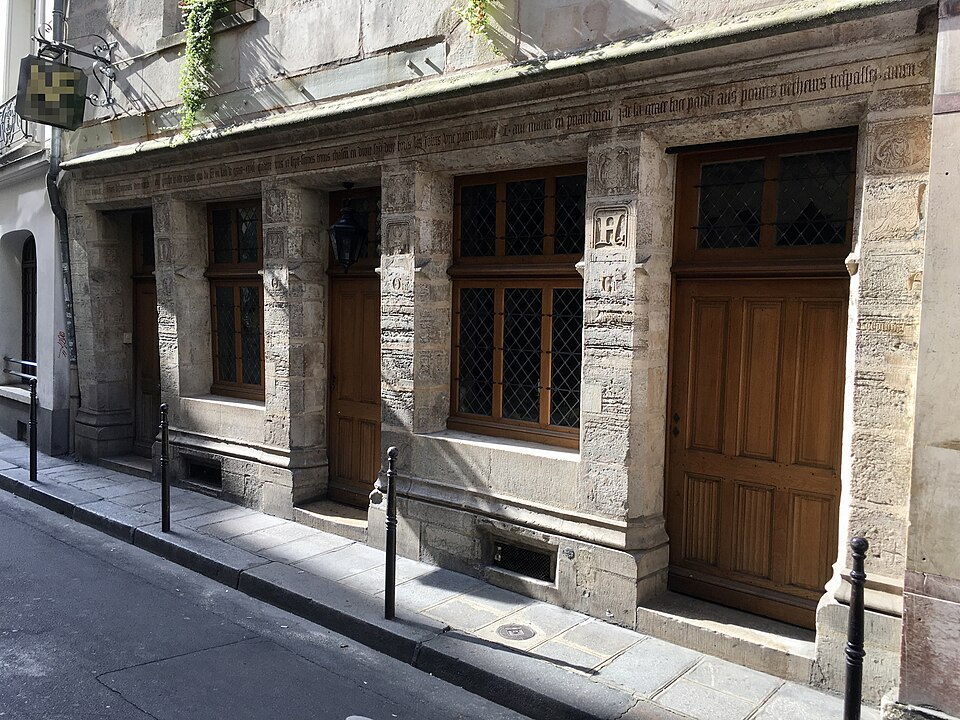
6) Nicolas Flamel’s house (rue de Montmorency)
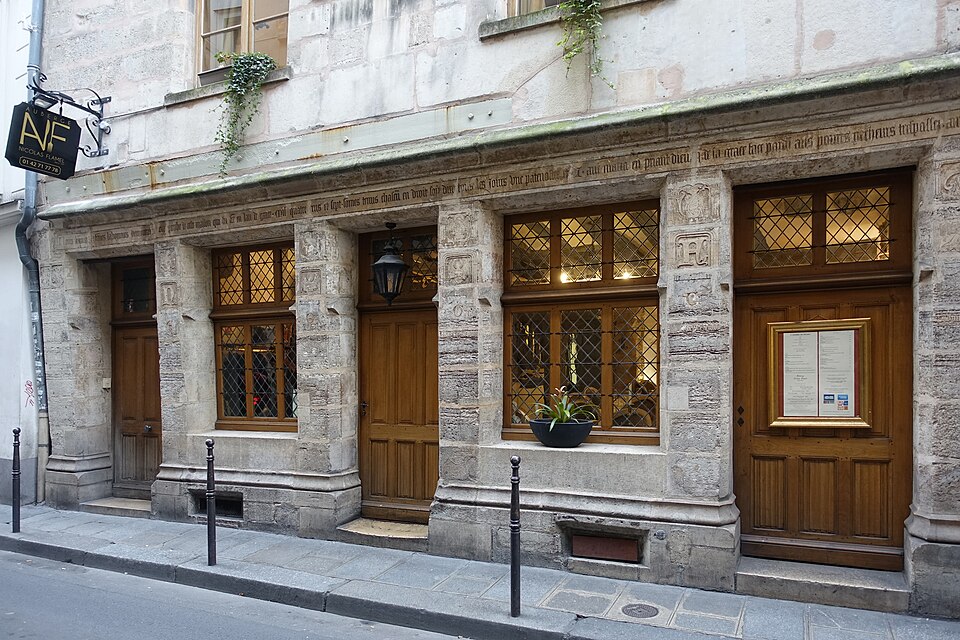
This is the headline stop for a lot of “Medieval Paris” searchers. The House of Nicolas Flamel is at 51 rue de Montmorency, completed in 1407, and it’s widely cited as one of the oldest houses in Paris.
What to look for
- The carved inscription band above the ground floor (it’s part of what makes the building famous)
- The way the street suddenly feels “small” around it, even in the busy 3rd arrondissement
The “hidden medieval” finish: a surviving tower and a city wall
7) Tour Jean-sans-Peur: medieval Paris you can still climb
Tour Jean-sans-Peur is a rare surviving piece of medieval residential architecture, completed between 1409 and 1411. It sits at 20 rue Étienne Marcel (tucked into a courtyard).
If you want one stop that feels unmistakably medieval inside, this is a strong pick.
8) Optional detour: Wall of Philip Augustus remnants
If you like the idea of “medieval Paris as a fortified city,” end with a wall fragment. One of the best-preserved stretches is near the intersection of rue Charlemagne and rue des Jardins-Saint-Paul.
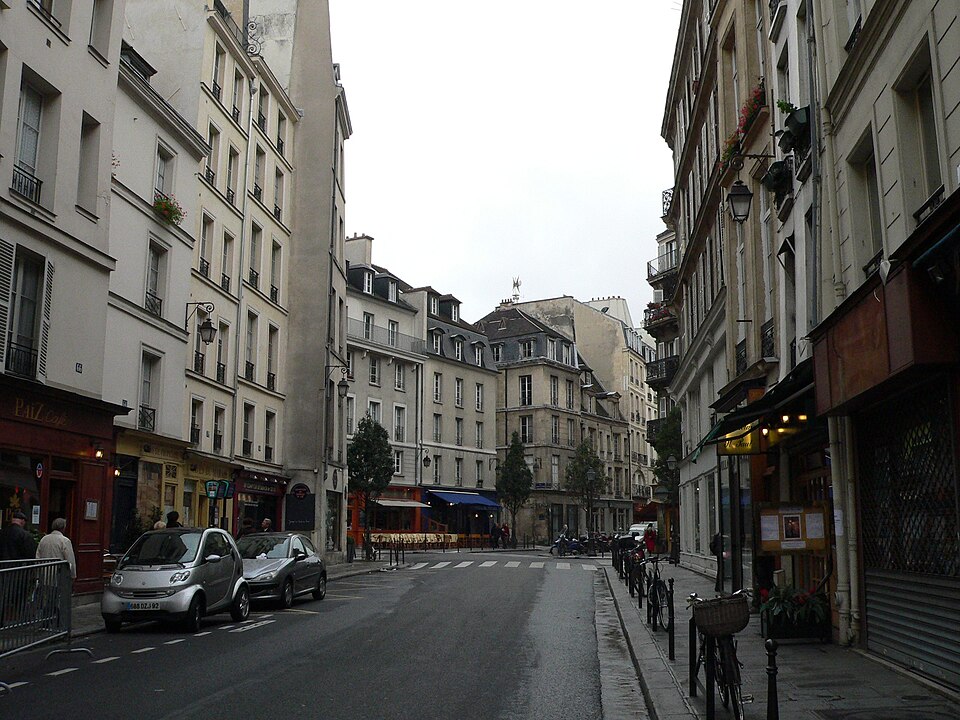
Want the medieval academia context? Add a free tour
If these old streets are your thing, the Latin Quarter is where medieval Paris becomes a story about scholars, debate, and the early university world. Our Latin Quarter & Notre Dame Tour is a good next step if you want the context behind what you’re seeing, without losing that medieval street atmosphere.
If you’re especially into the Marais side of the route, our Marais Uncovered: Free Walking Tour pairs nicely with the timber-house and hidden-courtyard vibe.
And if you’re a first-timer who wants the “historic core hits” in one walk (Notre-Dame to Louvre area), Paris Starts Here can complement this medieval-focused route.
FAQ: Medieval Paris self-guided walk
Where can I see real medieval streets in Paris?
Your best bets are small pockets: the Latin Quarter near the Seine, the Île de la Cité surroundings, and the Marais lanes around rue François Miron. Paris is heavily rebuilt, so medieval “street feel” is often about scale and layout more than untouched buildings.
Where is Nicolas Flamel’s house in Paris?
The House of Nicolas Flamel is at 51 rue de Montmorency in the 3rd arrondissement. It was completed in 1407 and is often cited as one of the oldest surviving houses in Paris.
Is Sainte-Chapelle medieval or just Gothic?
Sainte-Chapelle is medieval and Gothic, it was built between 1242 and 1248 under Louis IX. If you want a single paid stop that feels distinctly medieval, it’s one of the strongest choices.