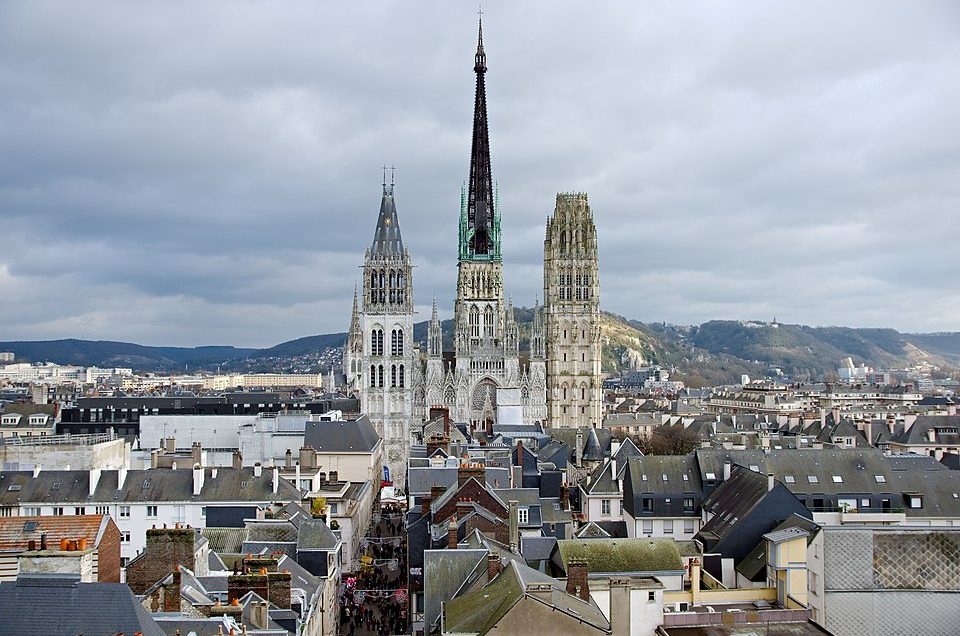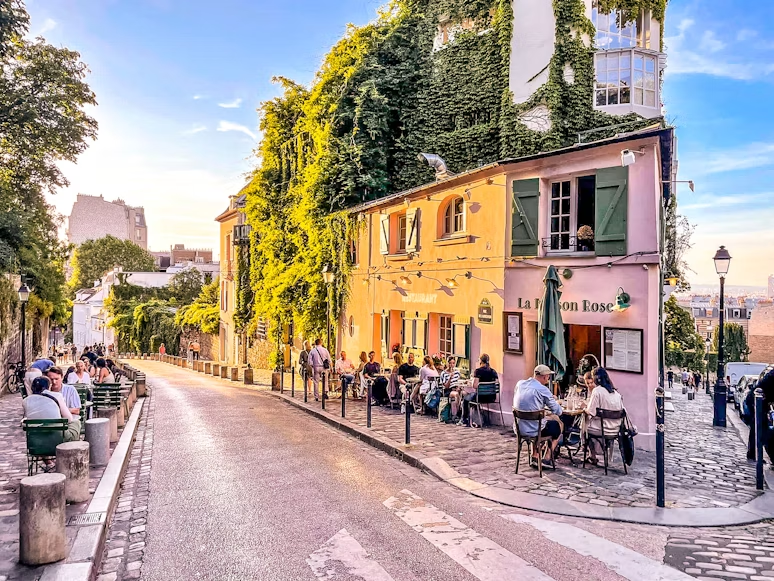

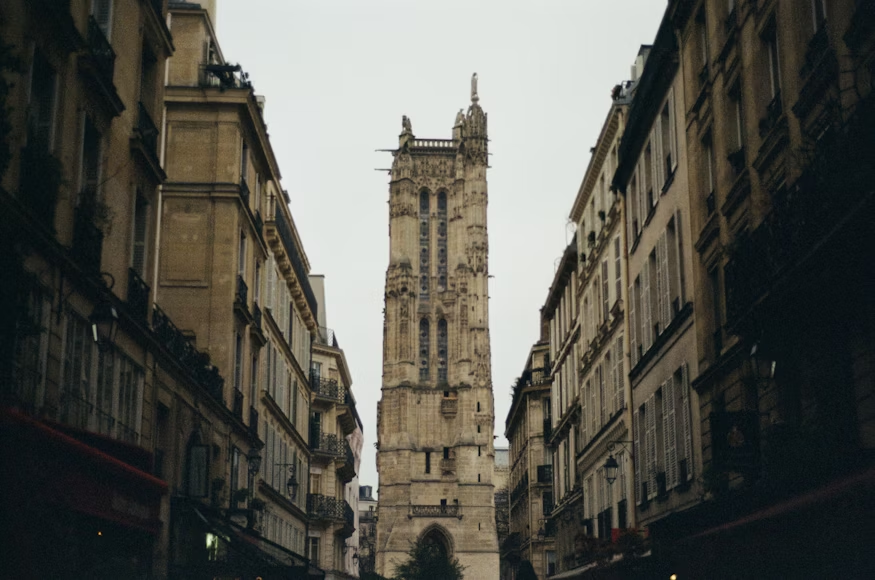
Paris isn’t only Haussmann boulevards and Belle Époque cafés—there are still pockets of medieval France architecture hiding in plain sight. This self-guided walk strings together Gothic chapels, remnants of royal power, and a few rare timber-framed survivors. Bring comfy shoes, a curious eye, and a camera that likes crooked beams.
Medieval France Architecture: The quickest way to spot it in Paris
Medieval Paris layers Roman foundations, Gothic “vertical” churches, and the occasional half-timbered façade into a city that was heavily rebuilt in later centuries. On this route, look for:
- Pointed arches and ribbed vaults (classic Gothic)
- Stained glass walls (Rayonnant Gothic at its showiest)
- Thick stone walls and Romanesque leftovers (rare in Paris)
- Timber framing (colombage) (even rarer in central Paris)
Photo by @Unsplash.com
Your self-guided route at a glance
Total time: ~2.5–4 hours (depending on interiors and photo stops)
Best time: Morning for smaller crowds on Île de la Cité
Start: Île de la Cité
Finish: Le Marais (easy to continue with dinner or a museum)
Stop order (walkable loop-ish):
- Sainte-Chapelle
- Conciergerie
- Saint-Julien-le-Pauvre + Square René Viviani
- Musée de Cluny (and the Roman baths)
- Arènes de Lutèce
- Rue François-Miron timber-framed houses
- House of Nicolas Flamel (optional detour, but worth it)
Tip: If it’s your first time in Paris, you can pair the early part of this walk with the highlights route on the Paris travel homepage or combine it with the classic center-city flow of the Paris Starts Here tour (Notre Dame to Louvre).
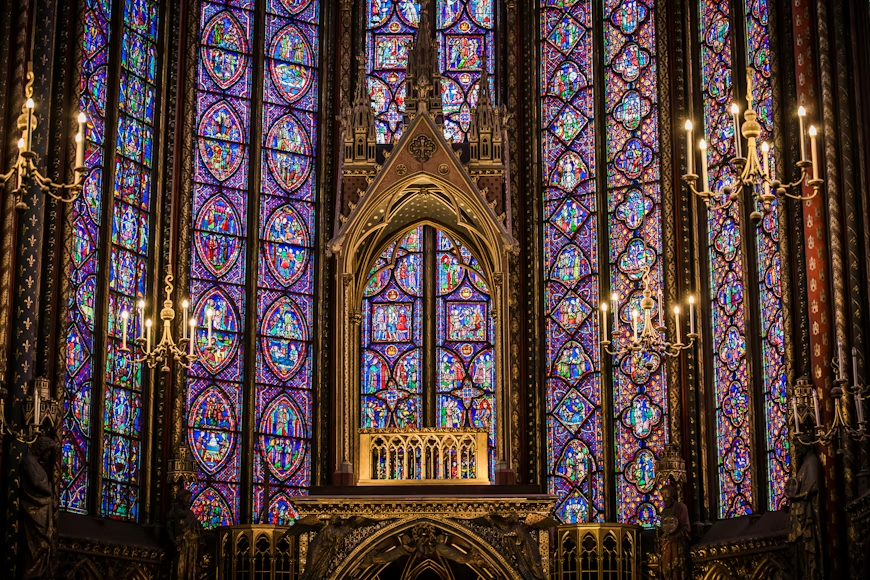
Photo by @Unsplash.com
Stop 1: Sainte-Chapelle — a jewel box of Rayonnant Gothic
If you want one single “wow” moment for medieval Paris architecture, this is it. Sainte-Chapelle was built in the 13th century and is famous for its vast stained glass program—often described as a pinnacle of Rayonnant Gothic.
What to look for
- Walls that seem to disappear into glass
- Sky-high vertical lines that pull your eyes upward
- Storytelling windows that feel like medieval “graphic novels”
Practical note: Tickets/timetables can vary seasonally; check the official site before you go.

Photo by @Unsplash.com
Stop 2: Conciergerie — medieval royal power you can still walk through
A few minutes away is the Conciergerie, one of the surviving pieces of the medieval royal palace complex on Île de la Cité. It’s a powerful place to feel how Paris shifted from royal residence to revolutionary history—without losing its medieval bones.
Don’t miss
- The great medieval halls (massive scale, non-religious Gothic energy)
- The sense of “fortress Paris” on the river edge
Photo by @Wikimedia Commons
Crossing to the Left Bank: the medieval heart of the Latin Quarter
From here, head toward the Left Bank (the Latin Quarter area). This is where medieval Paris feels most livable—small lanes, older churches, and layers of student-city history.
If you’d rather do this section with a guide later, bookmark the Left Bank tour for a deeper dive into the neighborhood’s stories.
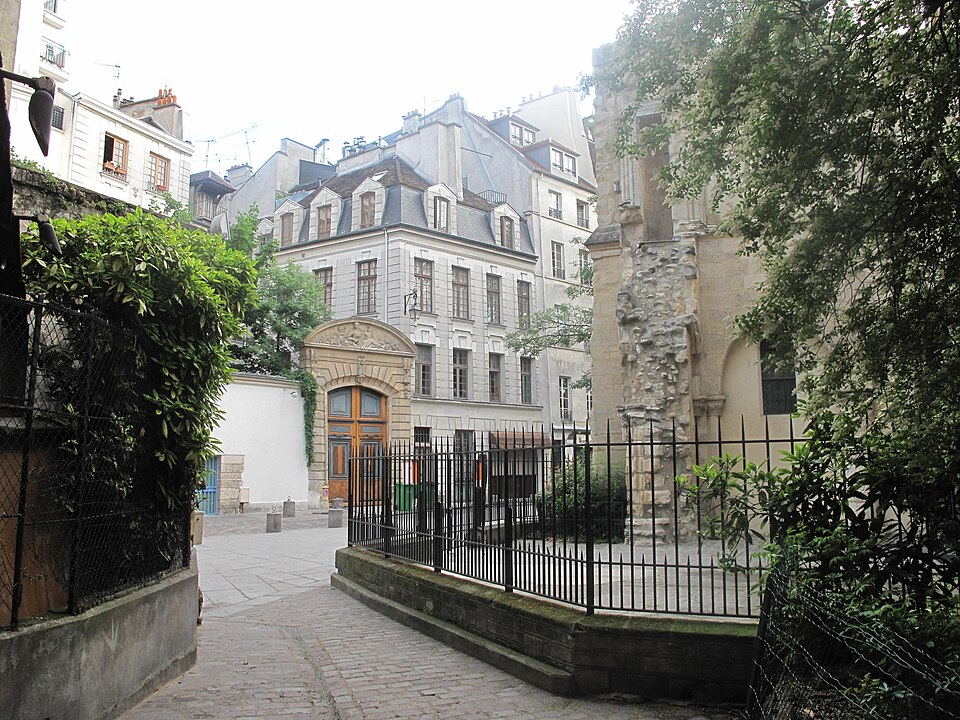
Photo by @Wikimedia Commons
Stop 3: Saint-Julien-le-Pauvre — one of the oldest church sites in Paris
Tucked near Notre-Dame, Saint-Julien-le-Pauvre is often described as one of the city’s oldest religious buildings, with roots reaching back into early medieval Paris and a structure shaped by Romanesque-to-early Gothic transitions.
What to look for
- A simpler, older feel compared with later Gothic showpieces
- A calm atmosphere that makes it easy to imagine medieval Paris “before the crowds”
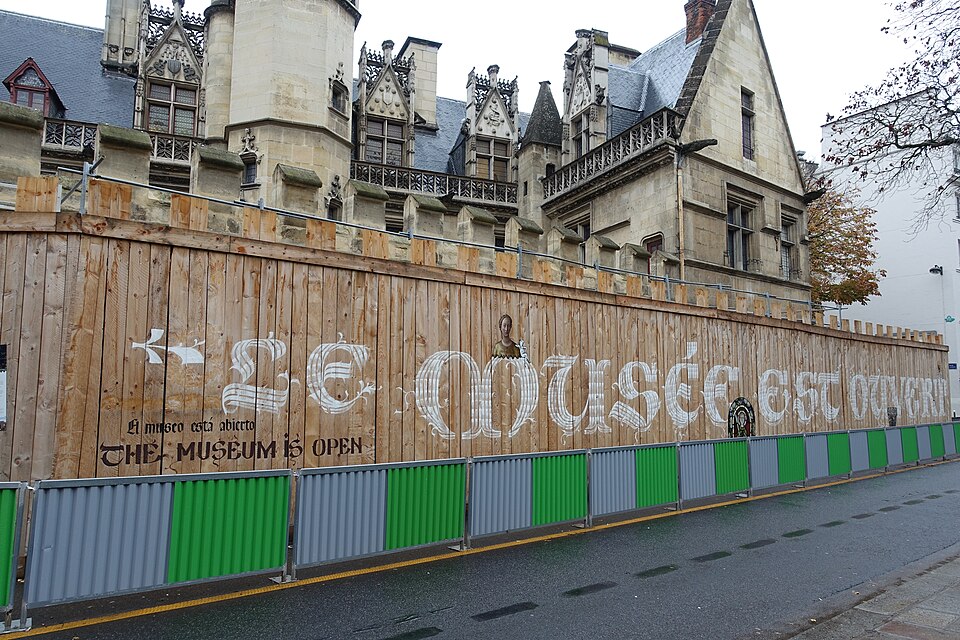
Photo by @Wikimedia Commons
Stop 4: Musée de Cluny — medieval art + actual Roman baths
Musée de Cluny (the National Museum of the Middle Ages) is built into a rare Parisian mashup: Gallo-Roman baths and a 15th-century medieval mansion (Hôtel de Cluny). It’s one of the best places in the city to connect architecture, daily life, and medieval craft in one stop.
Quick picks inside
- The preserved bath spaces (especially the monumental cold room/frigidarium area)
- Medieval objects that explain how people actually lived—not just what kings commissioned
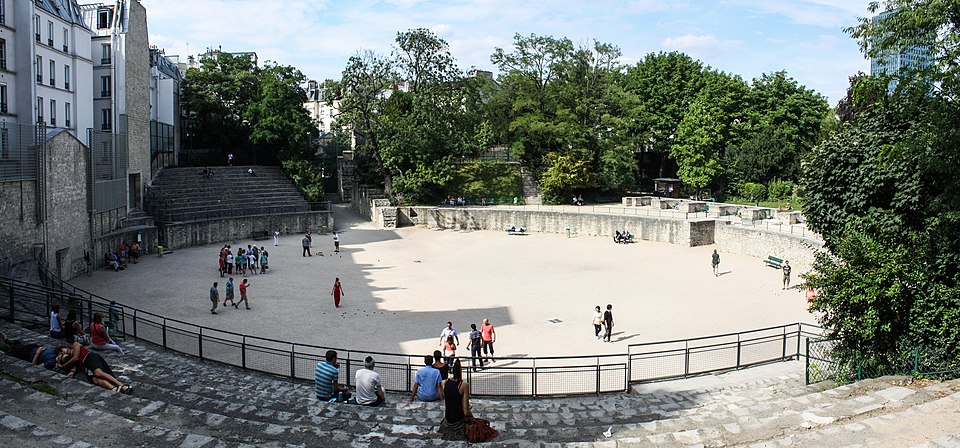
Photo by @Wikimedia Commons
Stop 5: Arènes de Lutèce — older than medieval, essential for the “layers” story
Not medieval (it’s Roman), but it explains why medieval Paris looks the way it does: the city literally grew on top of earlier worlds. The Arènes de Lutèce is a major surviving Roman site in Paris, built in the 1st century and still visible today.
Why it belongs on a medieval walk
- Medieval builders reused materials and footprints from earlier periods
- Seeing Roman Paris makes “medieval Paris” feel less like a single era and more like a continuous timeline
Head to Le Marais for the rarest sight: timber-framed medieval-style houses
Central Paris doesn’t have many surviving timber-framed façades—so when you find them, they feel like time travel.
If you want more Marais context afterward, the Free Marais Tour is a great add-on (especially if you love hidden courtyards and old aristocratic mansions).
Photo by @Wikimedia Commons
Stop 6: Rue François-Miron — the famous timber-framed survivors
At 11 and 13 rue François-Miron, you’ll find two of the best-known half-timbered houses in Paris—iconic for their medieval look and one of the most “photogenic” remnants of that earlier streetscape.
How to make the most of the stop
- Step back and look up: the charm is in the vertical lines and the wonky geometry
- Notice how different the street feels compared with the grand avenues elsewhere
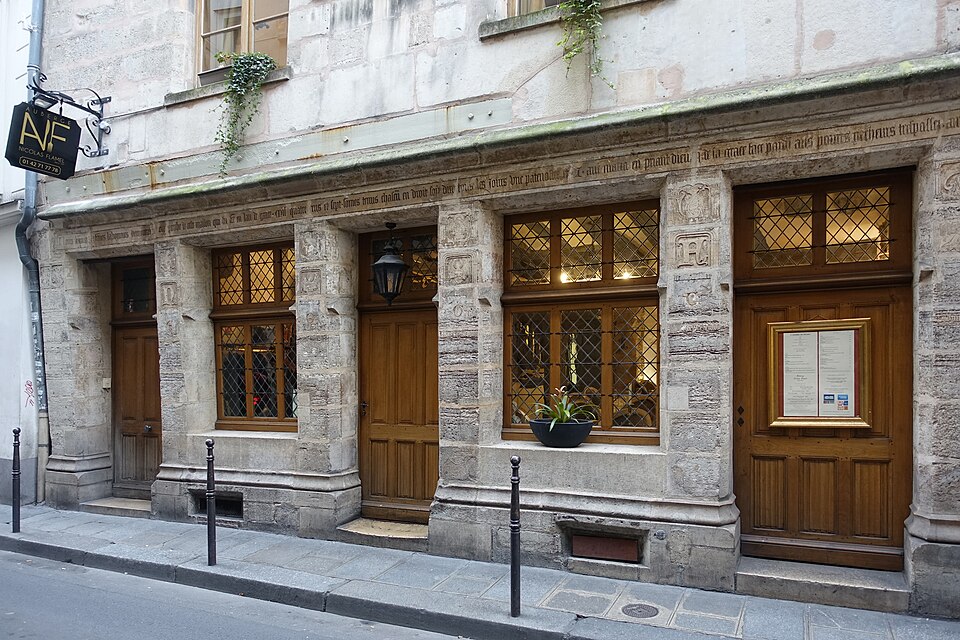
Photo by @Wikimedia Commons
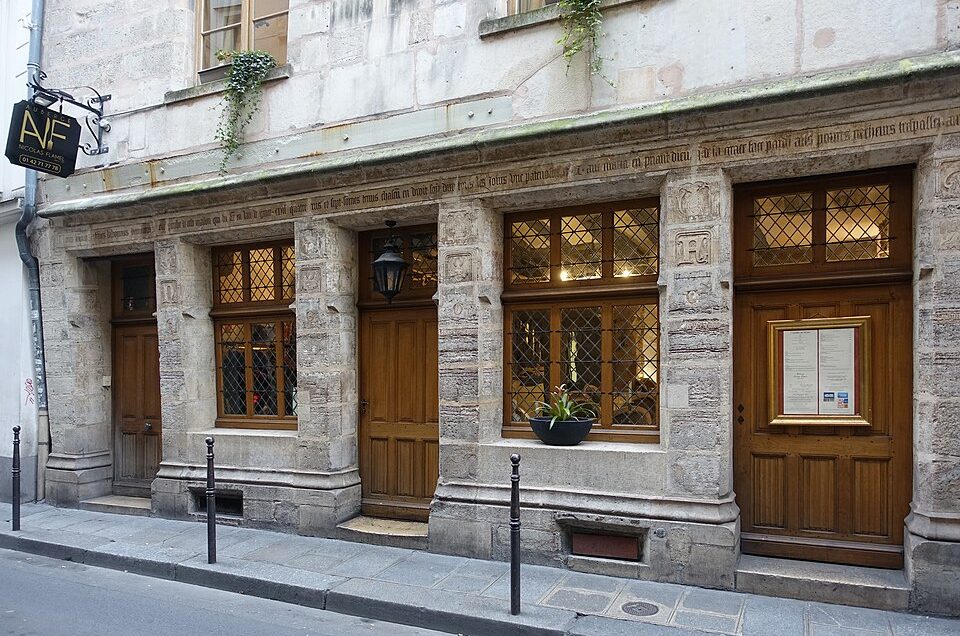
Stop 7 (optional): The House of Nicolas Flamel — medieval Paris in one doorway
If you want a final “I can’t believe this still exists” moment, detour to 51 rue de Montmorency to see the House of Nicolas Flamel, dated to the early 15th century and frequently cited as among the oldest surviving houses in Paris.
Why history buffs love it
- It’s small-scale medieval urban architecture—intimate and human
- It rewards you for leaving the main tourist circuit
Extra: A simple “medieval architecture checklist” for your walk
Use this like a scavenger hunt:
- Rayonnant Gothic light: Sainte-Chapelle’s stained glass effect
- Palace-to-prison power shift: Conciergerie’s medieval remains
- Older church atmosphere: Saint-Julien-le-Pauvre’s early fabric
- Roman + medieval stack: Cluny baths + Hôtel de Cluny
- Timber-framed “postcard Paris”: Rue François-Miron
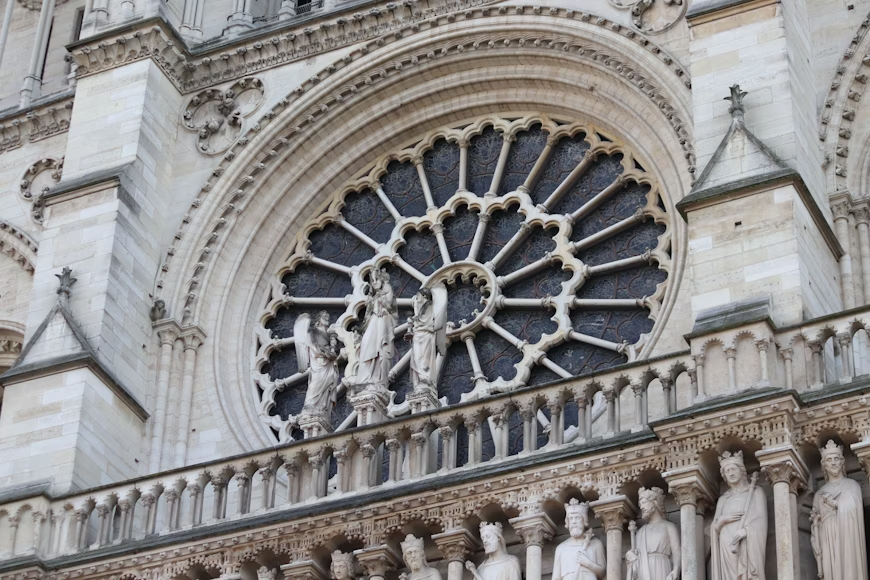
Photo by @Unsplash.com
The Free Tour Angle
If you love the timber-framed houses of Medieval Paris, you will love the hidden stories on our Latin Quarter Free Walking Tour.
(And if you want an easy first-timer route that connects the big icons with great context, the Paris Starts Here tour pairs perfectly with this medieval-focused walk.)
FAQs
Where can I see real medieval buildings in Paris today?
Start on Île de la Cité with Sainte-Chapelle and the Conciergerie, then head to the Latin Quarter for Saint-Julien-le-Pauvre and Musée de Cluny. These stops preserve some of the clearest medieval-era fabric in central Paris.
Are there any timber-framed houses left in Paris?
Yes—two of the best-known are at 11 and 13 rue François-Miron in the Marais. They’re famous because so few timber-framed façades survive in central Paris.
Is Sainte-Chapelle considered Gothic architecture?
Yes—Sainte-Chapelle is a major example of Rayonnant Gothic, celebrated for its extensive stained glass.
What’s the best medieval museum in Paris?
Musée de Cluny (National Museum of the Middle Ages) is the go-to because it combines medieval collections with the preserved Roman baths and the Hôtel de Cluny itself. It’s one of the most immersive “architecture + objects” experiences in the city.
How long does this self-guided medieval walk take?
Plan for 2.5–4 hours depending on whether you go inside Sainte-Chapelle, the Conciergerie, or Musée de Cluny. If you keep it exterior-only, you can do it faster.
Is the Latin Quarter good for medieval history?
Absolutely—the area still holds older churches and medieval-era street patterns, and it’s an easy base for walking between major historical sites.