
Rouen Cathedral’s Saint-Romain Tower is one of the most fascinating parts of this Norman Gothic landmark. Today, the tower is closely tied to the cathedral’s restored carillon, a 64-bell instrument with a history shaped by war damage, restoration, and live music. This guide explains the architecture of the towers, the story of the bells, and who is buried in Rouen Cathedral, including Rollon, better known in English as Rollo, and the heart of Richard the Lionheart.

Photo by @Unsplash.com
What you’ll learn today about the Saint-Romain Tower and 64 bells
- What the Saint-Romain Tower is, and why it matters at Rouen Cathedral.
- How the Rouen Cathedral carillon grew into a 64-bell instrument.
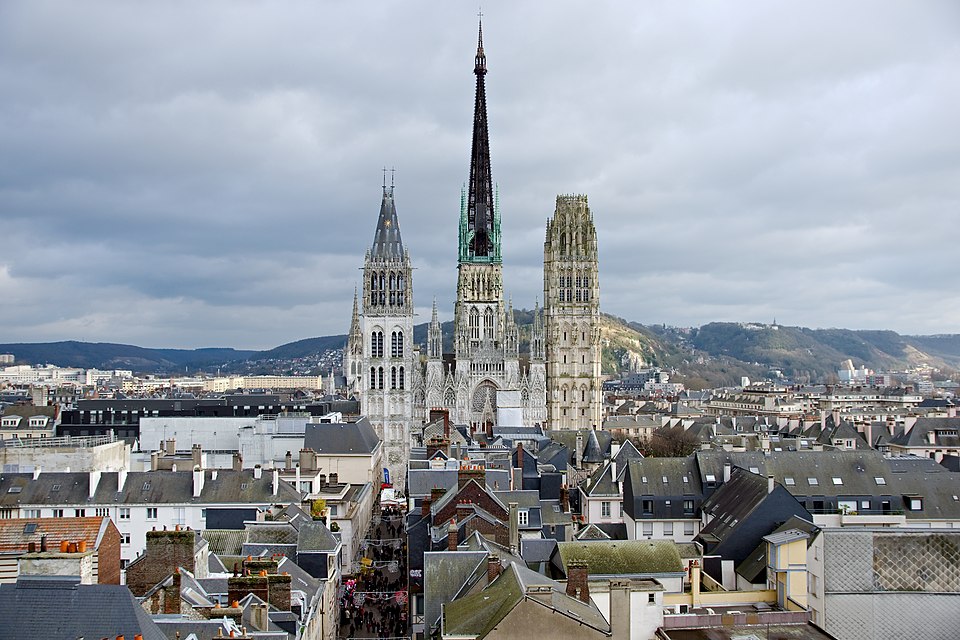
- The difference between the Saint-Romain Tower, the Butter Tower, and the central spire.
- Who is buried in Rouen Cathedral, including Norman and Plantagenet figures.
- How to visit the tower or hear the bells when you are in Rouen.
Quick answer: what is the Saint-Romain Tower and 64 bells story?
The Saint-Romain Tower is the older Gothic tower on Rouen Cathedral’s west front. Rouen Tourism identifies it as a 12th-century tower, while the city’s cathedral story also includes 14th-century portals, a 15th and 16th-century façade, the Butter Tower, and a 19th-century cast-iron spire.
The “64 bells” refers to the Rouen Cathedral carillon, now associated with the Saint-Romain Tower after a major restoration and relocation project completed in 2016. The Association du Carillon de la Cathédrale de Rouen explains that the carillon was formerly in the Butter Tower and was moved to the Saint-Romain Tower during the 2016 reconstruction, partly to integrate the large Jeanne d’Arc bell and improve public access conditions.
A deep dive into Rouen Cathedral’s towers
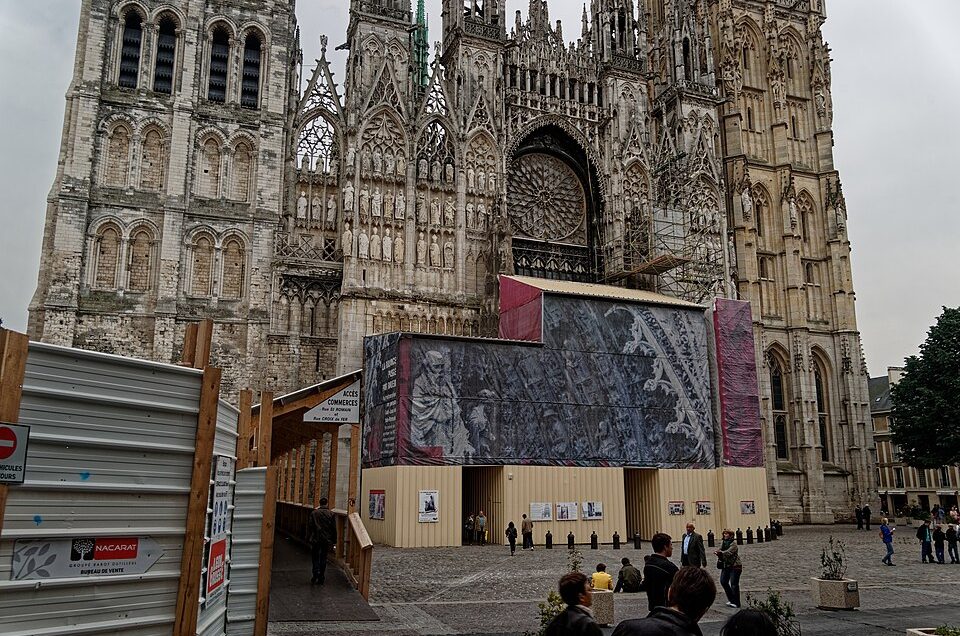
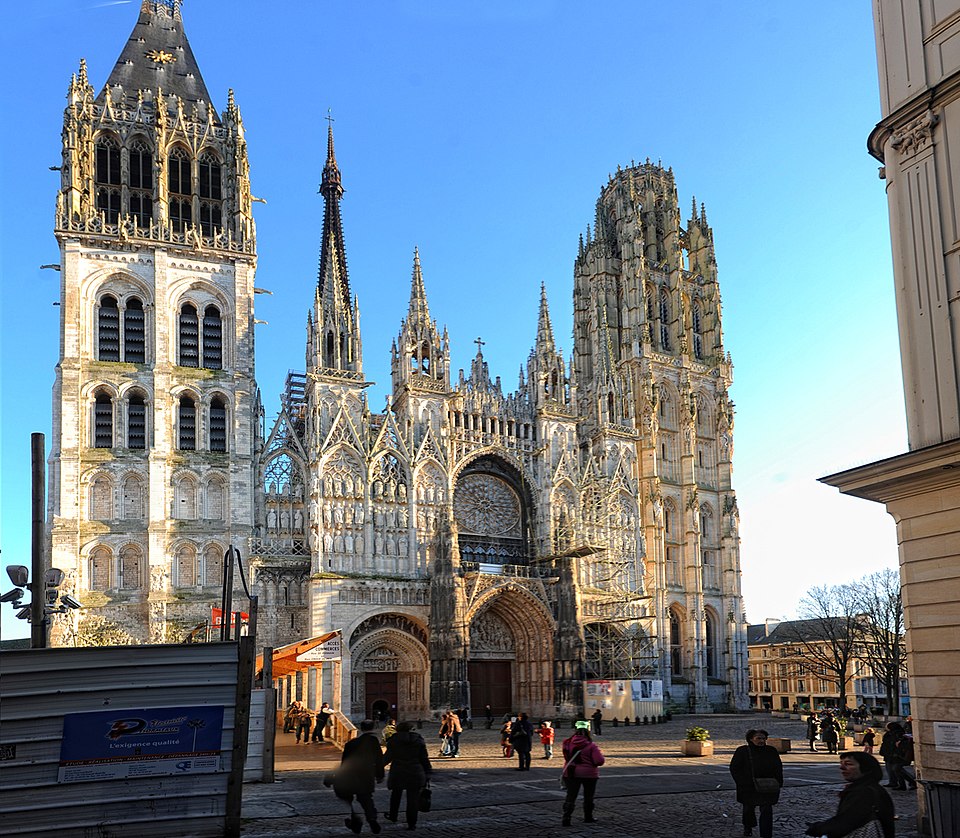
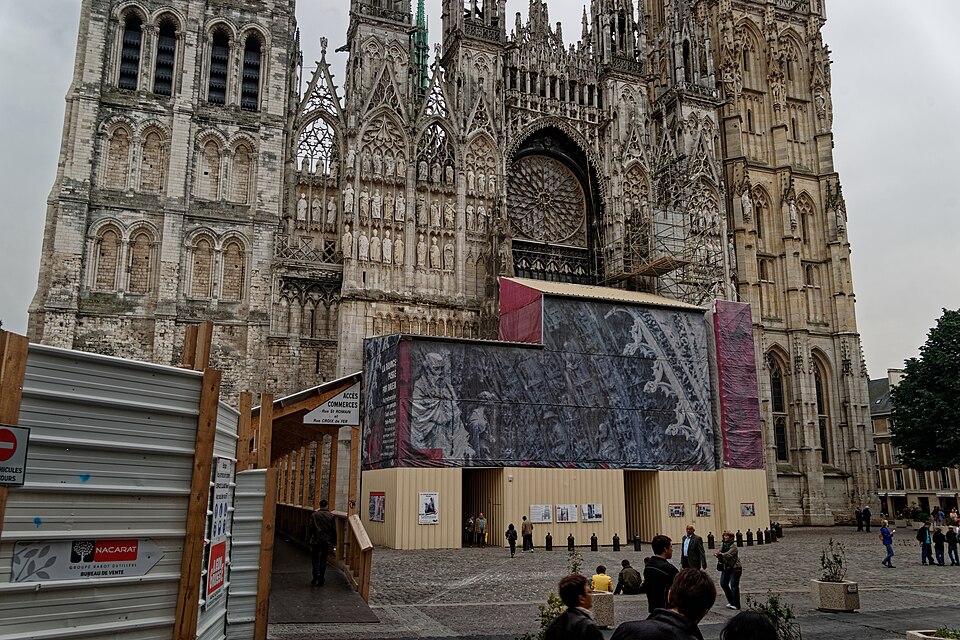
Rouen Cathedral is not symmetrical, and that is part of its charm. Its towers were built, altered, damaged, and restored across several centuries, so the façade reads almost like a timeline of French Gothic architecture.
The Saint-Romain Tower: the older Gothic tower
The Saint-Romain Tower, also called the Tour Saint-Romain in French, is tied to the earliest Gothic phase of the cathedral. It stands on the northern side of the west front and is older than the Butter Tower, which came later. Rouen Tourism places the Saint-Romain Tower in the 12th century, making it one of the key features for understanding the cathedral’s medieval origins.
The carillon association gives the tower’s height as 82 metres (about 269 feet) and describes the visitor route into the tower through the Cour d’Albane. On special carillon visits, visitors climb into the Saint-Romain Tower to reach the lower carillon room and, after a final staircase, the carillonneur’s cabin.
The Butter Tower: the later flamboyant neighbor
The Butter Tower, or Tour de Beurre, is the south-west tower. It is famous partly because of the traditional story behind its name: donations linked to Lenten dispensations helped fund the tower, so people associated it with the right to eat butter during Lent. A University of Notre Dame architectural record notes this traditional explanation and dates the Butter Tower’s construction to the late 15th and early 16th centuries.
The carillon was not always in the Saint-Romain Tower. The ACCR explains that the 29-bell carillon created in the early 20th century was installed in the Butter Tower in 1920, before later expansions and the eventual 2016 relocation.
The central lantern tower and iron spire
Rouen Cathedral’s central spire is another essential part of the skyline. Rouen Tourism states that the cast-iron spire rises to 151 metres (about 495 feet), making it the highest in France. It replaced an earlier spire destroyed by lightning in 1822 and was designed using cast iron, a modern material for its time.
This mix of old stone, flamboyant detail, and iron engineering is one reason Rouen Cathedral feels so layered. It is not one single Gothic moment, but several centuries of architecture stacked into one monument.
How Rouen Cathedral got its 64 bells
The 64 bells did not appear all at once. The Rouen Cathedral carillon grew through several stages, including 20th-century additions and a major 21st-century restoration.
From a Joan of Arc bell to a full carillon
According to Rouen Tourism, a large bourdon bell in honor of Joan of Arc was decided in 1913, along with a 29-bell carillon. This ensemble was installed in the Butter Tower in 1920. The carillon was enlarged in 1954, then expanded again in 1959 with new swinging bells connected to the keyboard.
The ACCR adds that in 2015 the bells went back to the Paccard foundry in Annecy for restoration, with 16 new bells cast as part of the project. After reconstruction, the instrument reached 64 bells and became one of the two largest carillons in France by number of bells, alongside Chambéry.
How the 64-bell carillon works
A carillon is not just a set of bells ringing at random. It is a musical instrument played from a keyboard and pedalboard, with the carillonneur using large wooden keys to control the bells.
Rouen Tourism explains that the cathedral’s carillon has 64 bells, “as many bells as notes.” It also notes that the bells are from four generations and range from small bells to the large Jeanne d’Arc bell.
The ACCR lists Jeanne d’Arc as the largest bell, weighing 9,500 kg (about 20,944 pounds). Other large bells include Romain, Germaine, Cécile, and Agnès, with many smaller bells completing the instrument.
Why “Saint-Romain Tower 64 bells” is such a specific search
The phrase matters because it connects two things that were not always together: the Saint-Romain Tower and the modern 64-bell carillon. The carillon was historically in the Butter Tower, but the 2016 restoration moved the instrument into the Saint-Romain Tower. That is why the Saint-Romain Tower and 64 bells now belong together in searches, tours, and local storytelling.
Who is buried in Rouen Cathedral?
The short answer: Rouen Cathedral contains burials, tombs, memorials, or partial burials connected to major Norman, English, and French figures. The most famous names include Rollo, William Longsword, Henry the Young King, and Richard the Lionheart’s heart.
It is important to be precise here. Not every monument is a full-body burial, and Richard the Lionheart’s case is a heart burial, not his full tomb.
Rollo, founder of Normandy
Rouen Tourism states that the cathedral choir contains the burial place of Rollon, the founder of the Duchy of Normandy. In English, he is usually known as Rollo.
Rollo’s presence gives Rouen Cathedral a direct link to the Viking origins of Normandy. For visitors asking “who is buried in Rouen Cathedral?”, he is usually the first name to know.
Richard the Lionheart’s heart
Richard I of England, better known as Richard the Lionheart, is also connected to Rouen Cathedral. Rouen Tourism notes that his heart was deposited in the cathedral “in remembrance of love for Normandy.”
A University of Notre Dame record clarifies the detail: Richard’s heart is buried at Rouen Cathedral, while his body is at Fontevraud Abbey in Anjou.
William Longsword
William Longsword, the son of Rollo, is another important figure associated with Rouen Cathedral. A church monument record notes that his tomb in Rouen Cathedral dates from the 14th century, while an earlier burial had been in the ancient sanctuary.
This makes the cathedral not only a religious site, but also a dynastic memory space for early Normandy.
Henry the Young King
Henry the Young King, the son of Henry II of England and Eleanor of Aquitaine, also has a tomb at Rouen Cathedral. World History Encyclopedia identifies the effigy as coming from Henry the Young King’s tomb in Rouen Cathedral.
Henry is a particularly interesting figure because he was crowned during his father’s lifetime but never ruled independently in the way later kings did. His tomb adds another Plantagenet layer to the cathedral’s story.
The d’Amboise cardinals and Louis de Brézé
Rouen Cathedral also contains major Renaissance funerary monuments. The tomb of Cardinals Georges I and Georges II d’Amboise is a marble and alabaster monument in the choir or Lady Chapel area, completed in the early 16th century and richly decorated with saints, virtues, apostles, and classical ornament.
Another major monument belongs to Louis de Brézé, Grand Seneschal of Normandy. A church monument record attributes the work to Jean Goujon and notes that it was commissioned by Diane de Poitiers, Louis de Brézé’s wife.
How to visit the Saint-Romain Tower and hear the 64 bells
You can visit Rouen Cathedral itself, but access to the Saint-Romain Tower is different from a normal cathedral visit. The official cathedral site reminds visitors that the cathedral is an active place of worship, with rules about quiet, respectful behavior, dress, food, and pets.
For the carillon, check the ACCR or Rouen Tourism before planning. The ACCR says carillon visits enter through the Cour d’Albane, then climb the Saint-Romain Tower to the carillon spaces. This is a guided experience, not a casual walk-up tower visit.
The ACCR also lists regular Saturday carillon sessions, outside August, when the 64 bells are played live by carillonneurs. Schedules can change, so confirm the date before building your Rouen itinerary around the bells.
Why Rouen Cathedral is worth the trip from Paris
Rouen is a masterpiece of Gothic architecture and a perfect day trip from Paris. When you are back in the city, discover Paris’s own stunning architecture on our Paris Free Walking Tours.
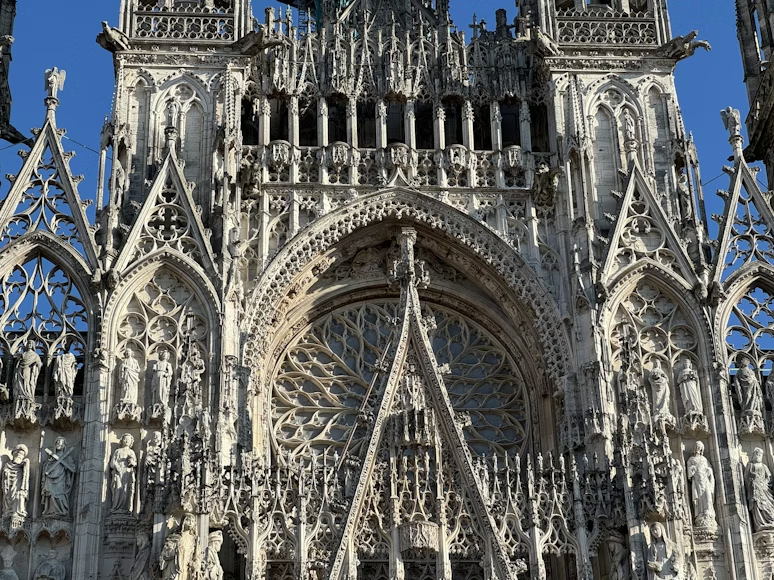
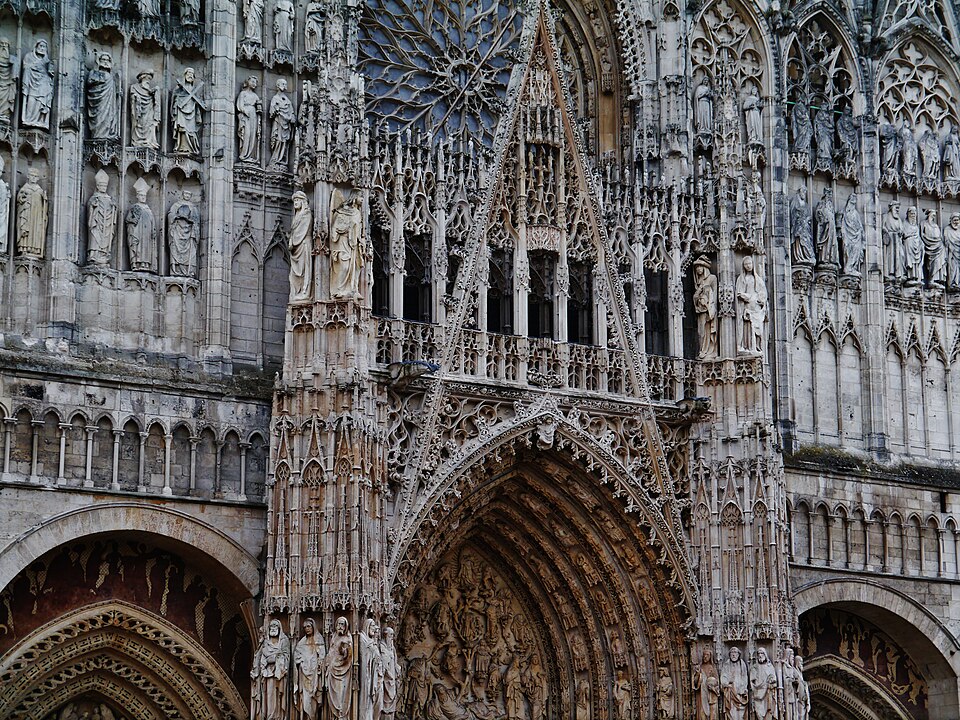
Rouen Cathedral gives you a very different Gothic experience from Paris. Paris has Notre-Dame and Sainte-Chapelle, while Rouen gives you a cathedral shaped by Norman history, a skyline-making iron spire, a carillon of 64 bells, and tombs linked to both Normandy and England.
FAQ: Rouen Cathedral, Saint-Romain Tower and 64 Bells
Why does Rouen Cathedral’s Saint-Romain Tower have 64 bells?
The Saint-Romain Tower now houses the restored Rouen Cathedral carillon, which reached 64 bells after a major restoration and expansion project in the 2010s. The carillon was formerly in the Butter Tower, then moved to the Saint-Romain Tower during the 2016 reconstruction.
Who is buried in Rouen Cathedral?
Rouen Cathedral contains burials, tombs, or memorials linked to Rollo, William Longsword, Henry the Young King, and the heart of Richard the Lionheart. It also has major Renaissance funerary monuments for the d’Amboise cardinals and Louis de Brézé.
Can you visit the Saint-Romain Tower and hear the bells?
Access to the Saint-Romain Tower is usually through scheduled carillon visits, not standard cathedral entry. You can also hear the bells during listed carillon sessions but check the official ACCR or Rouen Tourism schedule before you go.