
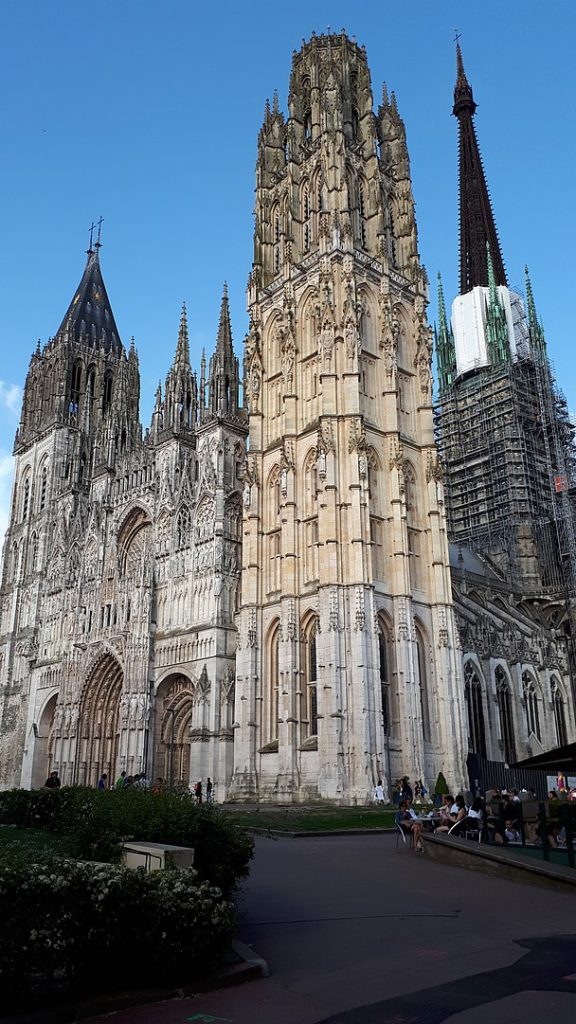
Rouen’s Notre-Dame Cathedral stands as a breathtaking example of Gothic architecture and remains one of the most celebrated landmarks in Normandy. A symbol of Rouen’s rich history, this cathedral is among the few architectural marvels from the 17th century that still grace the region.
Following devastating Viking raids, many surrounding medieval structures were lost, including the original church on this site. In its place rose the magnificent Notre-Dame Cathedral, which has since become a defining feature of Rouen’s skyline and the seat of the Archbishop.
Below are the top 10 captivating facts about Rouen’s iconic cathedral:
1. One of the Tallest Spires in the World
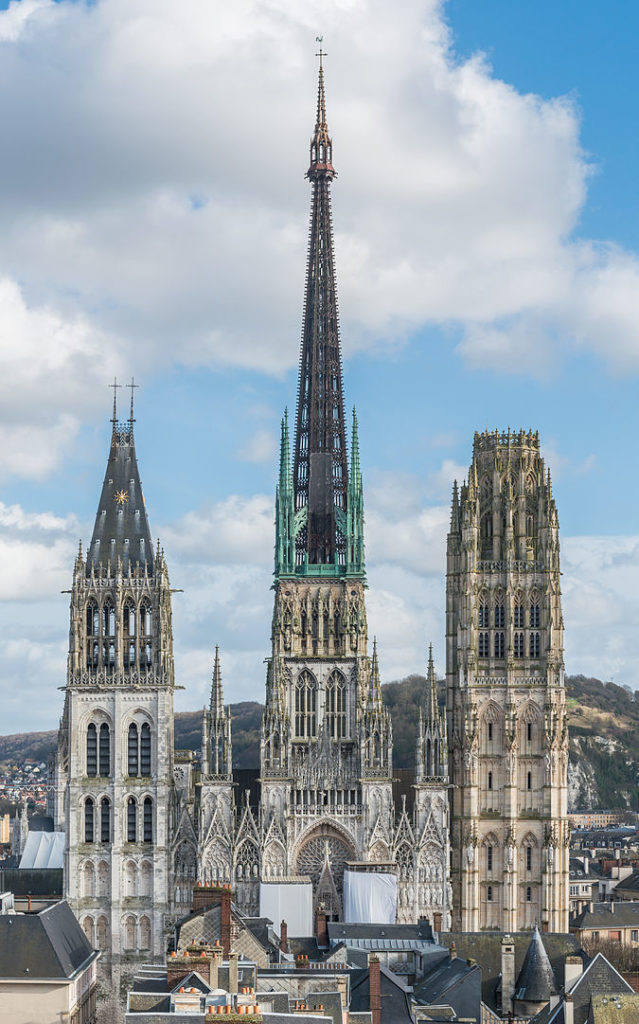
Rouen’s Notre-Dame Cathedral was once the tallest building globally until 1876. Though it currently ranks fourth, its 151-meter (495-foot) cast iron spire remains the tallest in France. The spire’s reconstruction in 1876 introduced cast iron, a novel feature at the time, and the cathedral was fully completed in 1880.
This towering structure caught the eye of Impressionist master Claude Monet, who famously painted the cathedral over 30 times, capturing its grandeur across various seasons and lighting conditions.
2. Final Resting Place of Legendary Figures
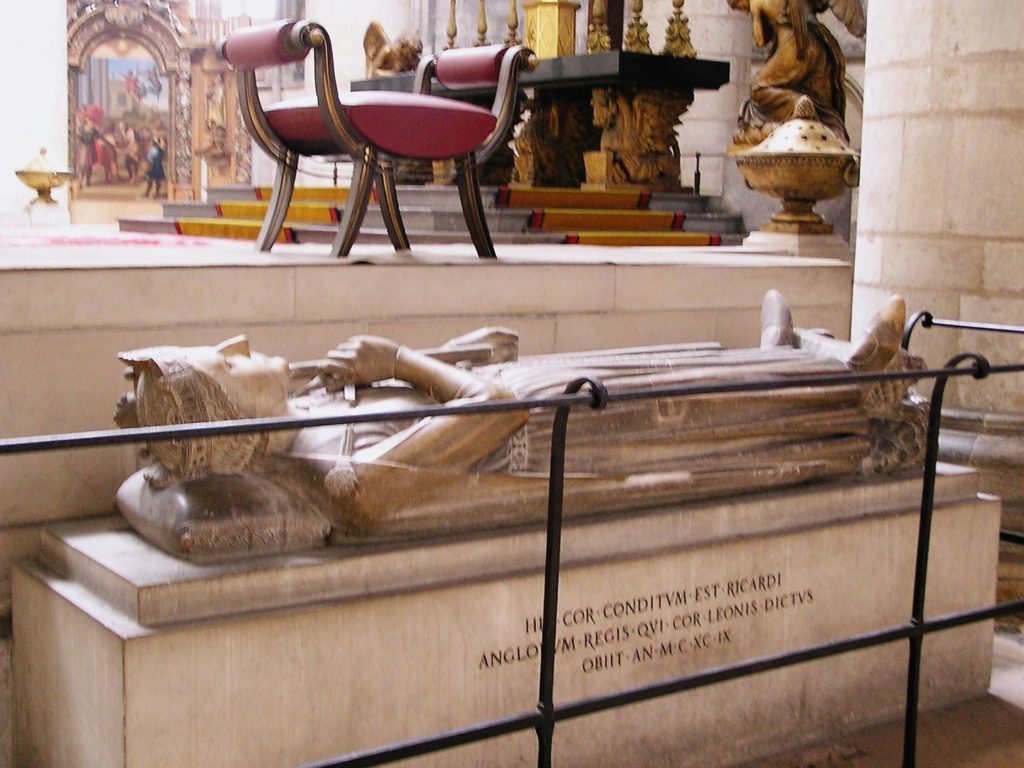
The cathedral is home to the tombs of several notable historical personalities from Normandy. Among them are Richard the Lionheart—King of England—whose heart rests here, and William I, Duke of Normandy. The Viking leader Rollo, the founder of Normandy, is also interred within its walls.
Interestingly, the entrails of Richard the Lionheart were buried at Château de Châlus-Chabrol, where he died from a crossbow injury.
Another memorial, a black marble slab, honors John Plantagenet of Lancaster, who played a key role in Joan of Arc’s trial. His original tomb was destroyed during the 16th century.
3. Repeated Lightning Strikes
Contrary to the adage, lightning has struck this cathedral multiple times. Recorded incidents occurred in 1110, 1284, 1625, 1642, and 1822. The 1822 strike destroyed the Renaissance spire, prompting its replacement with a sturdier cast iron structure.
A hurricane in 1683 further damaged the cathedral, and a fire in 1727 severely affected the choir. These recurring natural disasters have repeatedly challenged its resilience.
4. Severely Damaged During World War II
Rouen’s cathedral sustained significant damage during World War II. Bombs dropped during the 1944 Normandy invasion ravaged the south aisle and nearby chapels. Of the seven bombs that struck, one remained unexploded.
The lantern tower’s supporting pillar was hit, placing the spire in jeopardy. Fortunately, rapid repair efforts preserved the structure. Earlier, in April 1944, a fire consumed the Saint Romain tower, causing its bell to crash down.
Repairs stretched over several years, and the cathedral remained closed for nearly a decade.
5. A Triumph of Gothic Architecture
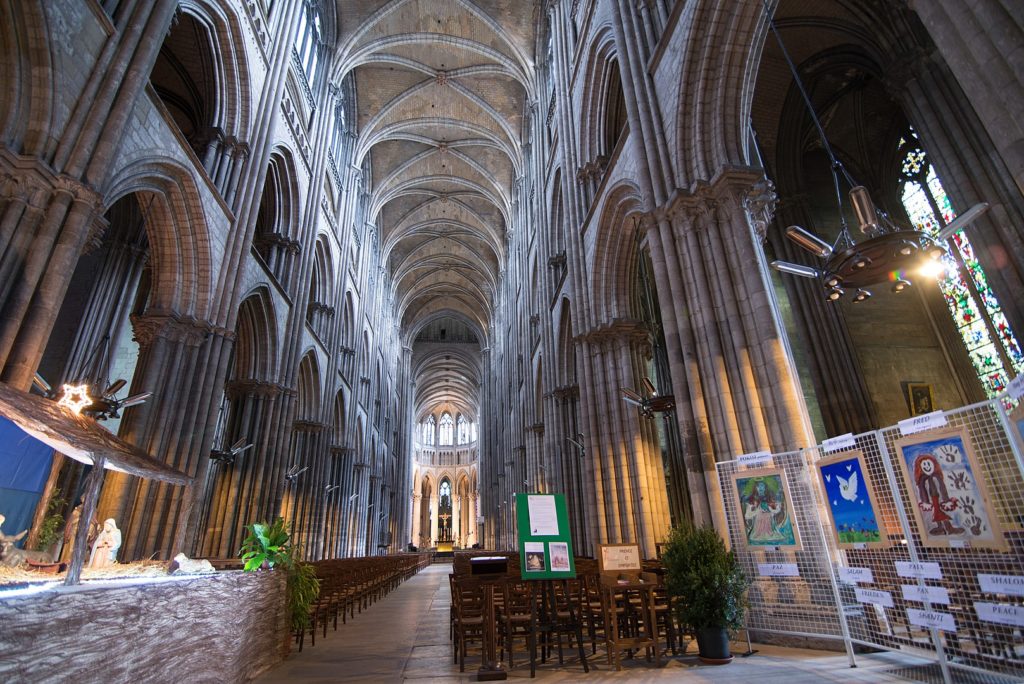
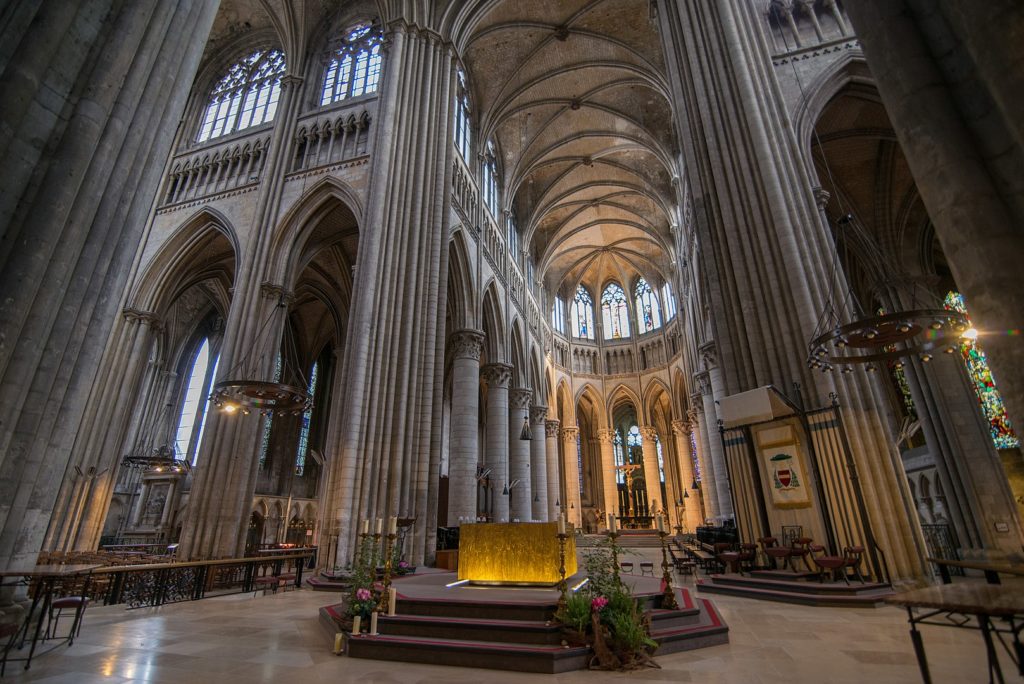
This cathedral epitomizes Gothic design, tracing its architectural lineage to Romanesque origins from the 11th century. Though reconstructed numerous times, it has preserved its distinctive Gothic gable roof and design intricacies.
The Gothic style flourished across Europe when construction began, offering more grandeur than Romanesque models. Its intricate rose window, crafted by Jean Perier in the 14th century, showcases flame-like patterns—a rare and stunning Gothic motif.
6. Continuous Renovations Over the Centuries
Despite enduring storms, wars, and time, the cathedral has been faithfully restored throughout the centuries. In 1302, the Lady Chapel was rebuilt. The spire, damaged in 1353, was followed by an expansion of the choir windows in 1430 and an upper level added to the northwest tower in 1477.
In 1999, a fierce storm destroyed the lantern tower. Restoration continued until 2015, when scaffolding on the western façade was removed. The spire, once black, was recolored in tones of gray with hints of blue and green—reflecting its layered history.
7. Heart of Rouen’s Historic Center
Situated in the heart of Rouen, the cathedral is surrounded by medieval timber-framed houses and historic landmarks, including the Gros-Horloge, the city’s 14th-century astronomical clock.
During the holiday season, the cathedral’s front plaza transforms into a bustling Christmas market. Nearby, charming cafés and eateries offer local treats like Normandy macaroons, making this area a vibrant hub year-round.
8. A Sanctuary for Musical Excellence
Since the 14th century, Notre-Dame Cathedral has echoed with music. Its acoustics are renowned, drawing musicians and choirs from across France and Europe.
The cathedral’s grand organ is among the most revered in the country. Esteemed organists such as Jean Titelouze, Crespin Carlier, Jacques Boyvin, and Robert Clicquot have all performed here, continuing a legacy that began in the Middle Ages.
9. A Muse for Generations of Artists
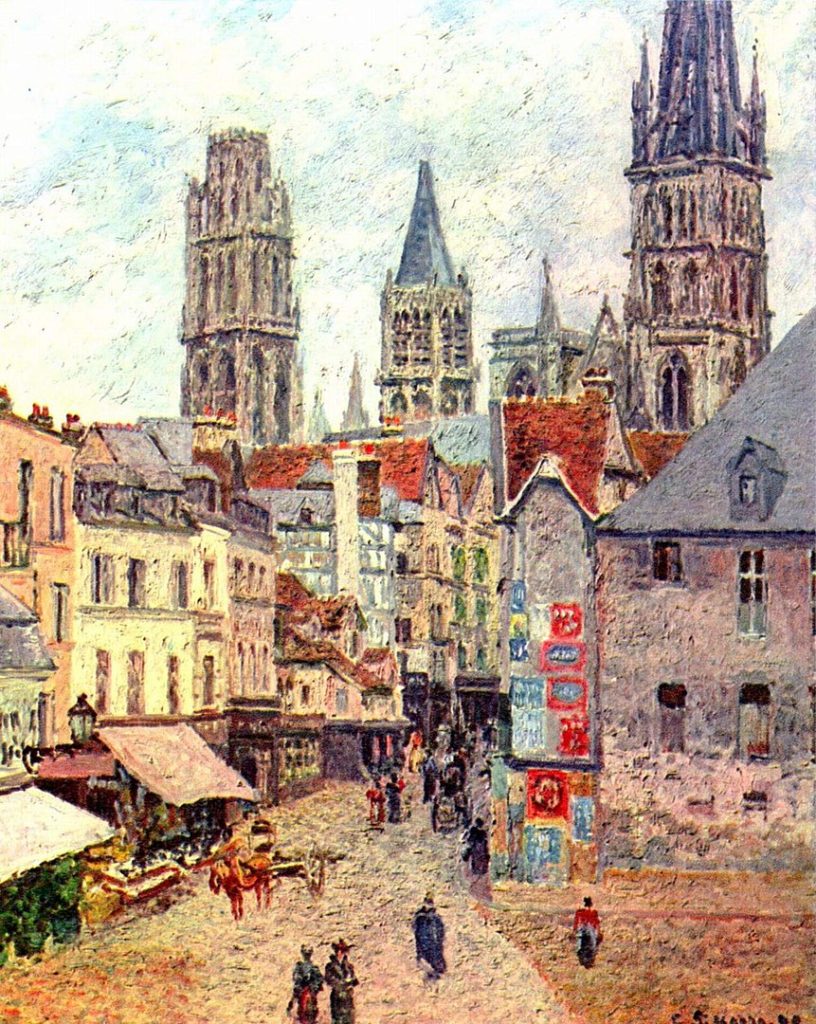
Rouen’s cathedral has served as inspiration for countless artists. Claude Monet’s famed series of over 30 paintings of the cathedral remain some of the most recognizable artworks in the Impressionist canon. Two of these masterpieces reside in the National Gallery of Art in Washington, D.C.
Other artists influenced by the cathedral’s design include Roy Lichtenstein, John Ruskin, and Mae Babitz. Regular exhibitions in and around the cathedral explore its historical and artistic significance. Inside, vivid stained-glass windows recount stories like that of Saint Julien.
10. Witness to Centuries of Historic Events
Throughout history, the cathedral has been central to Normandy’s ceremonial life. It was the site for the coronation of several Dukes of Normandy and the christening of numerous royals.
Many of these nobles are still buried within the cathedral’s crypt, underscoring its importance not only as a religious monument but also as a historical archive etched in stone.
Rouen’s Notre-Dame Cathedral remains a timeless masterpiece—resilient through centuries, beloved by artists and historians alike, and standing tall as a living testament to France’s architectural and cultural legacy.