
Short summary
Nestled in the heart of Rouen in Normandy, the Cathédrale Notre-Dame de Rouen is a masterpiece of Gothic architecture and a repository of rich history. In this guide you will discover the key features of the cathedral, explore its famous burials, and uncover ten fascinating facts about the cathedral that make it one of France’s must-see landmarks.
What you’ll learn today
- A clear explanation of the main architectural and artistic features of Notre-Dame de Rouen.
- The section “The Famous Tombs: Who is Buried Inside?” to answer the question “Who is buried in Rouen cathedral?”.
- A “10 Fascinating Facts about Rouen Cathedral” list to cover additional queries and enrich your visit.
- Practical tips for visiting and how the cathedral fits into a Normandy or Paris-focused itinerary (including a link to our Montmartre walking tour).
What is the Cathédrale Notre-Dame de Rouen?
The cathedral—commonly referred to as Notre-Dame de Rouen—is the archiepiscopal seat of the Archbishop of Rouen and a key monument in Normandy.
Construction spans many centuries: the current Gothic structure began around the mid-12th century on the site of earlier Romanesque and even Late Roman buildings.
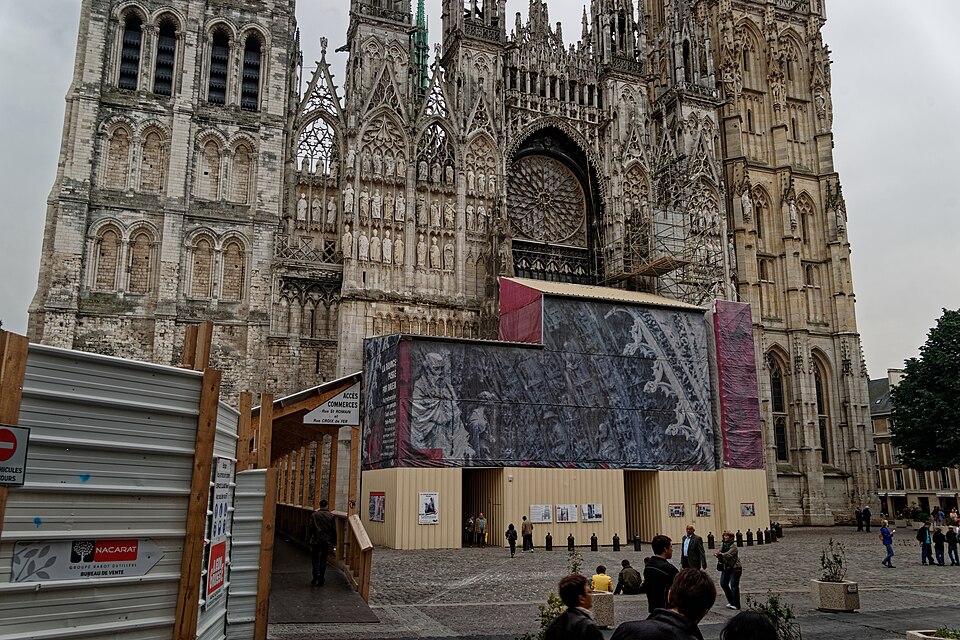
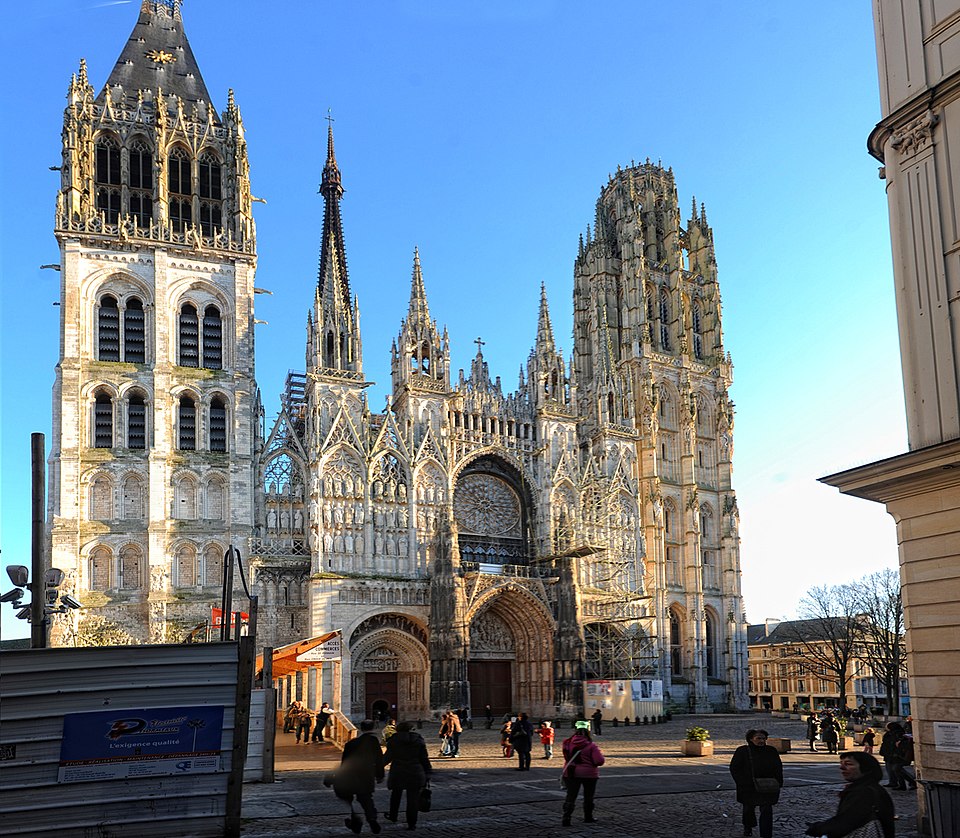
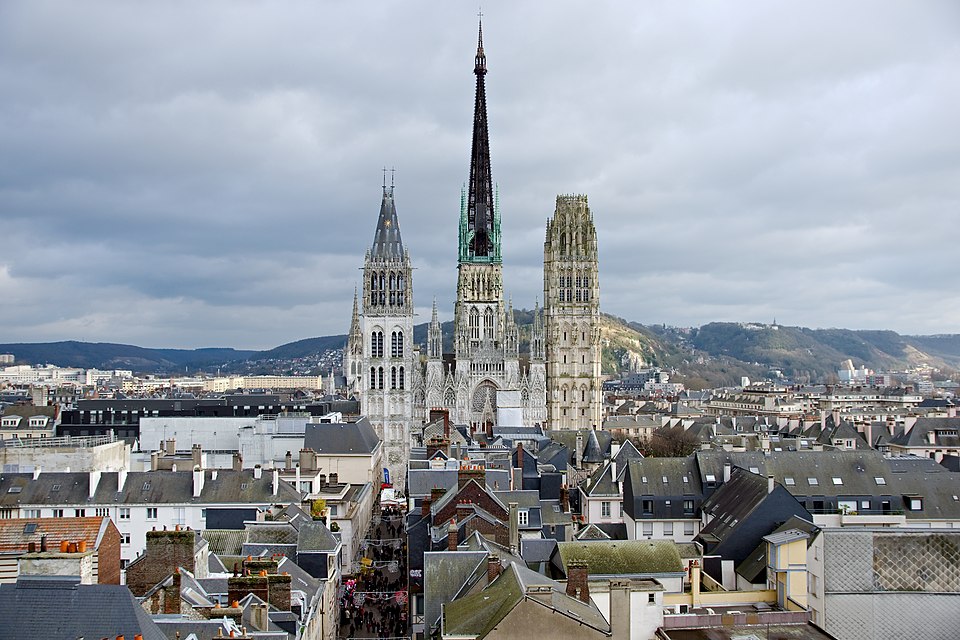
Architecturally and visually it is striking: its west façade, its soaring spire (151 m), and the rich decorative detail make it stand out even among France’s great cathedrals.
Key features of the cathedral
Exterior highlights
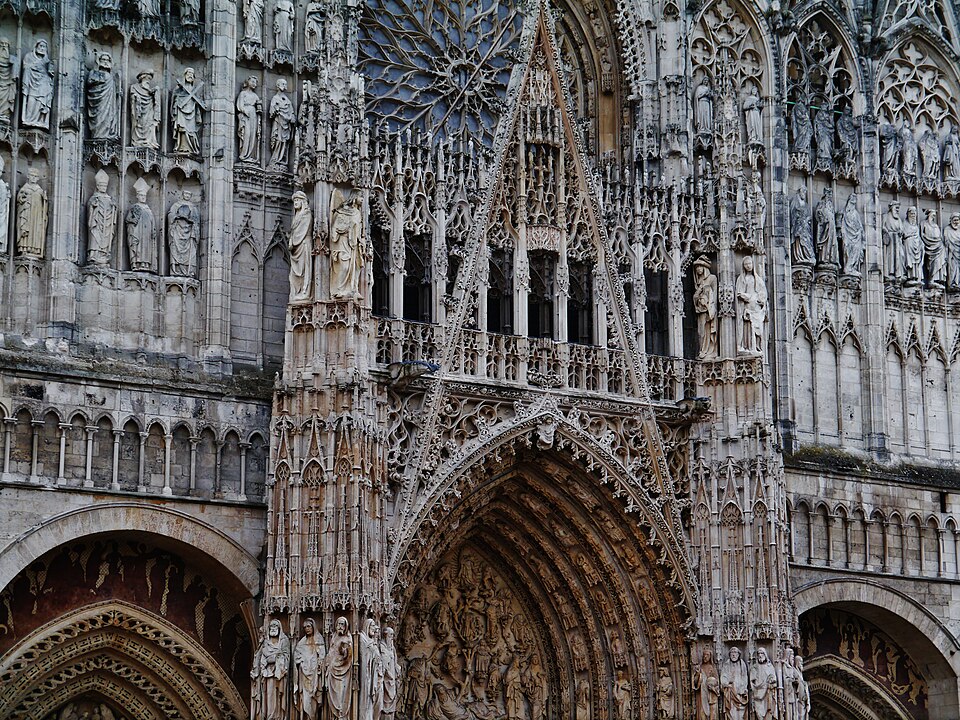
- The cathedral’s west façade is highly ornamented, especially in the Flamboyant Gothic style, with hundreds of sculpted figures.
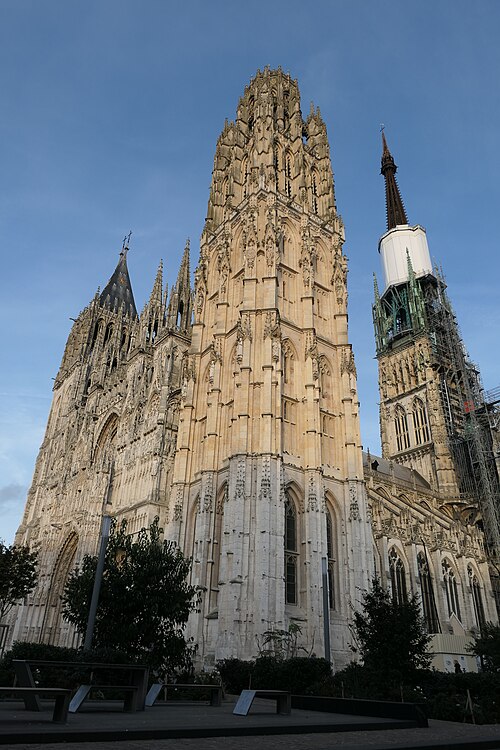
- The Butter Tower (“Tour de Beurre”) was funded by donations in return for the right to eat butter during Lent — a unique local detail.
- The spire, which rises to 151 m, once made the cathedral the tallest building in the world (late 19th century) before being surpassed.
Interior & art
- The crypt, beneath the choir, dates back to the 11th-century Romanesque church and can still be visited.
- Various chapels around the ambulatory and choir are richly decorated with stained glass, sculptures and tombs (see next section).
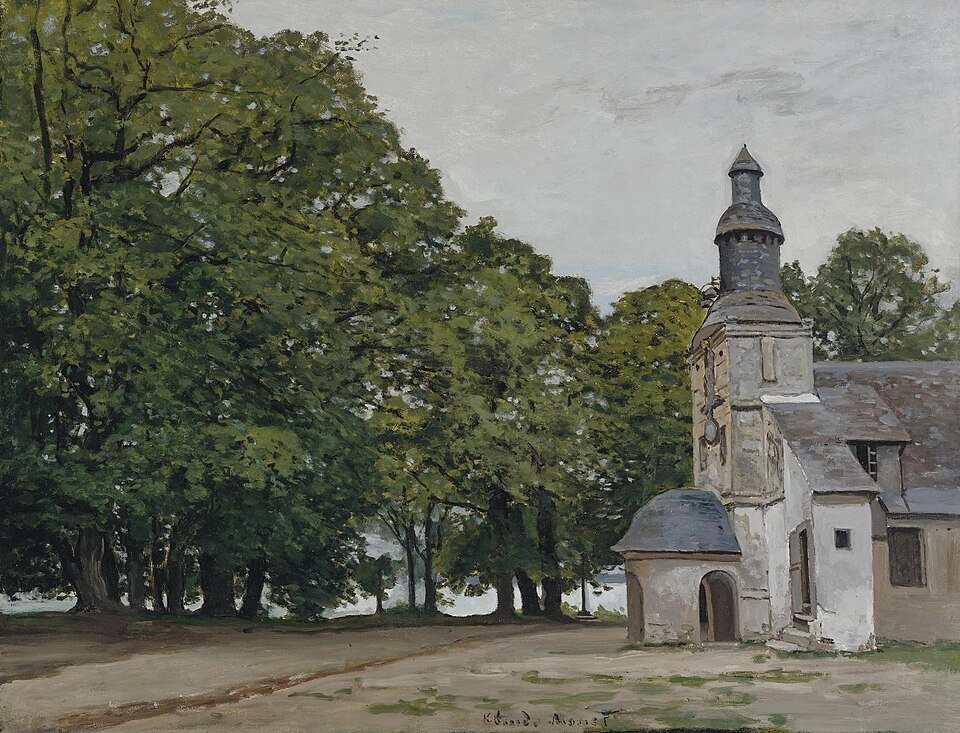
- The cathedral’s essence has been captured by artists such as Claude Monet, who painted its façade repeatedly to explore light and colour.
Visiting practicalities
Entry is generally free, though specific tours or access to some areas may require payment. According to tourist-guides you can “see it in 30 minutes but allow an hour to fully appreciate” the building.
It is located in the historic center of Rouen, so easy to combine with exploring the city’s old town and riverside.
The Famous Tombs: Who is Buried Inside?
One of the common questions about Notre-Dame de Rouen is who is buried there. Below are some of the primary burials and commemorations.
Key burials
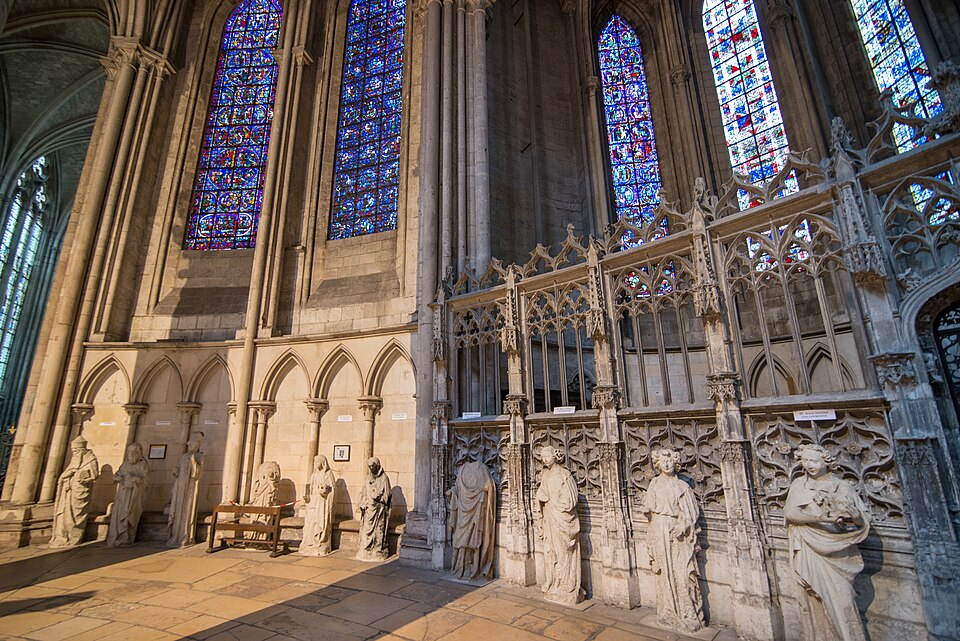
- The cathedral houses a tomb containing the heart of Richard the Lionheart (King of England and Duke of Normandy). While his body rests elsewhere, his heart (and possibly other remains) are here.
- It is also traditionally the resting place of early Norman dukes such as Rollo (founder of Normandy) and his son William Longsword, though the original tombs have been altered and transferred over time.
- The tomb of the Cardinals d’Amboise is found in the Chapel of the Virgin; this is a masterpiece of sculpture in the cathedral.
- The tomb of Louis de Brézé (d. 1531), created by the sculptor Jean Goujon, includes his wife Diane de Poitiers kneeling next to his transi-figure.
Why this matters
These burials reflect the cathedral’s role as a dynastic church for Normandy, linked to both French and English royal and noble families. They are also major artistic works, so looking for them adds depth to a visit.
10 Fascinating Facts about Rouen Cathedral
Here are ten engaging and lesser-known facts about Notre-Dame de Rouen (the “Rouen facts” you asked for).
- The spire reaches 151 metres (about 495 feet), making it the tallest church spire in France.
- From 1876 to 1880 the cathedral was the tallest building in the world (thanks to the spire) before being overtaken by Cologne Cathedral.
- The “Butter Tower” was funded by donations from the faithful who wanted to eat butter during Lent.
- The cathedral shows a continuum of Gothic styles, from early Gothic in the 12th century St-Romain tower, through to late Flamboyant and even 19th-century cast-iron work.
- It was severely damaged several times: after a fire in 1200, damage by the Wars of Religion (16th century), bombings in World War II.
- The famous painter Claude Monet made a series of paintings of the cathedral façade at different times of day and in varying light.
- The cathedral houses one of the largest carillons in France (64 bells in the Saint-Romain tower) and the heaviest peal of bells in France.
- Underneath the choir is the Romanesque crypt from the earlier cathedral, only accessible via the Chapel of Saint-Joan of Arc.
- The west façade is unique for having multiple portals that were successively rebuilt, with the central portal initially dedicated to St Romain and later to the Virgin.
- The cathedral remains in use as the seat of the Archbishop of Rouen (Primate of Normandy) and continues to serve a living community of faith.
How to Fit the Cathedral into Your Trip
Whether you’re visiting Rouen for a few hours or making it a major stop, here are ways to plan your visit.
Getting there & what to expect
- The cathedral lies in the historic centre of Rouen, Normandy (north-west France) and is easily reached by train from Paris (approx. 1 h 10 m from Paris Saint-Lazare).
- Entry is free for general access (though some areas may require a fee).
- Spend at least 30–60 minutes inside to appreciate the interior, chapels and tombs.
- Find out the schedules on the official website
What to look out for
- The three towers — note they are each different in style.
- The spectacular façade with its lace-like stonework and hundreds of figures.
- The tombs detailed above (especially the heart of Richard the Lionheart).
- The crypt beneath the choir.
- The views around the cathedral square and rooftops of Rouen — very photogenic.
Combining with other tours
If you are based in Paris and want to venture into Normandy for the day, Rouen is must-see. If your travels are focused on Paris, the best example of Gothic architecture is the incredible Sainte‑Chapelle. Be sure to also check out our top-rated Montmartre Walking Tour to see the stunning Sacré‑Cœur.
FAQ
What is the difference between “Notre Dame Rouen” and “Rouen Cathedral”?
They refer to the same building. “Notre Dame de Rouen” (Our Lady of Rouen) is its dedication and “Rouen Cathedral” is the common English name.
Who is buried in Rouen Cathedral?
Key burials include the heart of Richard the Lionheart, early Norman dukes such as Rollo and William Longsword (in various forms), and noble tombs like the Cardinals d’Amboise and Louis de Brézé.
How long does it take to visit Rouen Cathedral?
You can see the main parts in roughly 30 minutes, but allowing an hour will let you appreciate the interior, chapels and tombs more fully.