
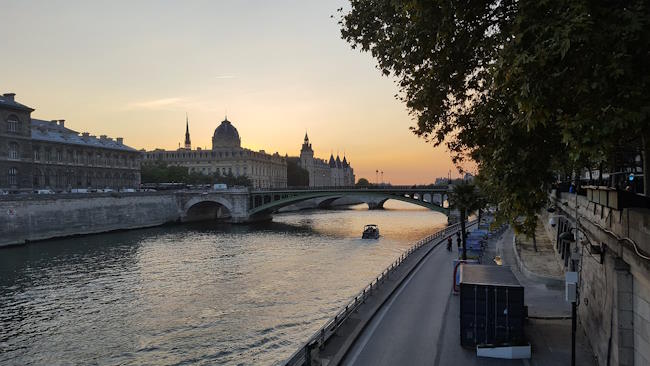
The Seine River gracefully divides Paris into two sections and remains the city’s most iconic waterway. For first-time visitors, a river cruise on the Seine is an absolute must. The most magical moment to embark on this journey is at sunset, allowing you to admire Paris both in daylight and under the glow of its evening lights.

During the ride, you’ll encounter three fascinating islands—each with its own unique history and charm. Let’s uncover the highlights of these remarkable spots.
Tranquility on Saint-Louis Island (Île Saint-Louis)
A Brief History
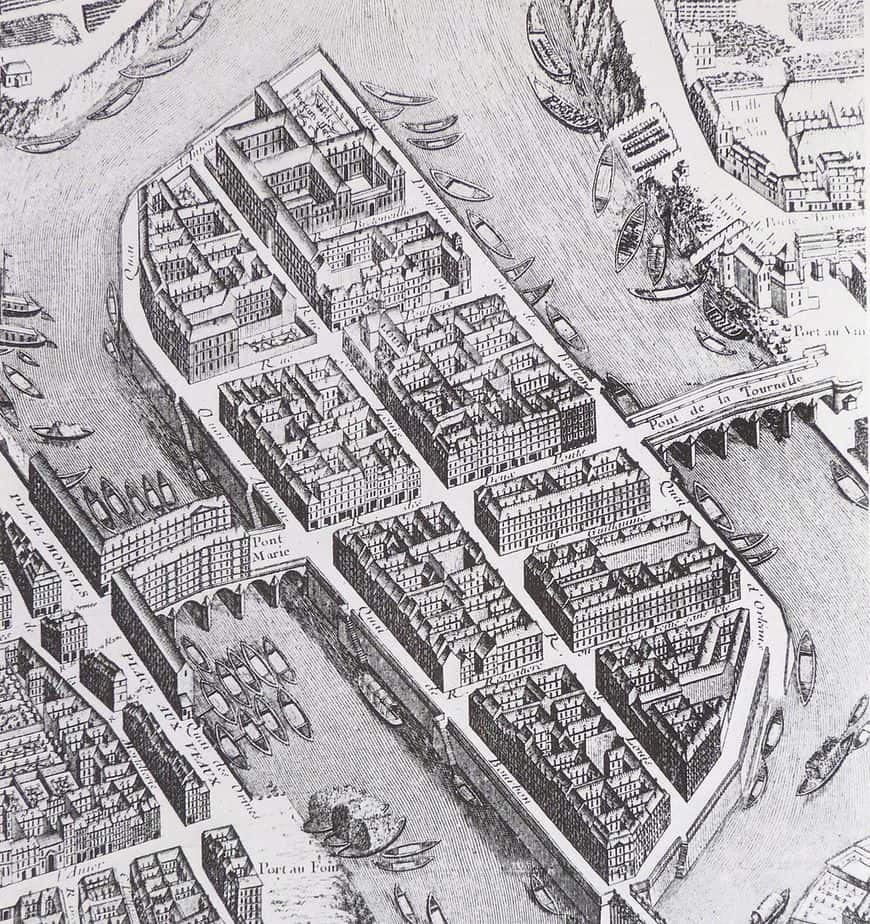
Île Saint-Louis, the easternmost island on the Seine, was originally two smaller islets: Cow Island and Notre-Dame Island. Owned by the canons of Notre-Dame, they remained largely uninhabited until the 17th century.
Under Henri IV, and later Louis XIII, urban development reshaped the land. The two islands were merged, the ground was elevated to prevent flooding, and an elegant grid of streets was established. Mansions soon lined these new streets, turning the island into a prestigious residential quarter. Though many of these mansions were later divided into apartments during the French Revolution, the island’s classic layout still endures.
What to See
The heart of the island is Rue Saint-Louis-en-l’Île, running east to west and filled with boutiques, art galleries, cafés, and restaurants. Be sure to stop at Berthillon, Paris’s legendary ice cream maker, which has been serving artisanal flavors since 1954.
Also worth visiting is the discreet Saint-Louis-en-l’Île Church, a richly decorated baroque gem. Wandering through the island’s calm streets offers a peaceful escape from Paris’s bustle.

Journey Through History on Île de la Cité
Historical Significance
Île de la Cité, often called the cradle of Paris, has been at the city’s heart for over 2,000 years. Settlements began during the Gaulish era, but the island rose to prominence under the Romans, who established it as the center for governance and religion.
The western side housed political leaders in the Palace, while the eastern side served religious purposes with a grand temple. After the Franks’ invasions, the Roman Palace was transformed into a royal residence. By the 13th century, Paris had regained its capital status, and monarchs such as Saint Louis and Philippe IV expanded the Palace, making it the seat of both royal power and the judiciary.
The eastern side became home to Notre-Dame Cathedral, built on the site of the Roman temple. Over centuries, the island evolved but never lost its importance. Even after the monarchy moved to the Louvre and later Versailles, the Conciergerie, once the royal janitor’s residence, became a notorious prison during the French Revolution.
In the 19th century, Baron Haussmann modernized the island, widening the forecourt of Notre-Dame and commissioning architect Viollet-le-Duc to restore the cathedral, transforming it into the Gothic masterpiece admired today.

Landmarks to Explore
Spanning 55 acres, Île de la Cité is packed with historic treasures. To explore thoroughly, dedicate a full day.
- Notre-Dame Cathedral: Despite the devastating 2019 fire, the cathedral’s façade remains awe-inspiring, and restoration is underway for reopening. Nearby, the Archaeological Crypt reveals remnants of ancient Lutetia.
- Rue Chanoinesse: A quiet street behind the cathedral, lined with cobblestones and historic buildings.
- Jean-XXIII Square & Deportation Memorial: Peaceful green spaces at the island’s eastern tip.
- The Conciergerie: Once a royal palace, later a prison where Marie Antoinette spent her final days.
- Sainte-Chapelle: Built by Saint Louis to house relics of the Passion of Christ, this Gothic marvel dazzles with towering stained-glass windows.
- Place Dauphine: A charming triangular square with cafés, bookshops, and pétanque players.
- Pont Neuf: Despite its name, this “New Bridge” (1607) is the oldest stone bridge in Paris, offering superb river views.
- Square du Vert-Galant: A romantic park at the island’s western tip, perfect for sunset moments.
A Scenic Stroll on Île aux Cygnes (Swans Island)

Origins
Unlike the other two, Île aux Cygnes is man-made. Originally built in the early 19th century as a levee to protect Grenelle Harbor, it was later reinforced and planted with trees. Its current form took shape after the 1937 World Expo, when temporary structures connected it to the Left Bank.
Highlights
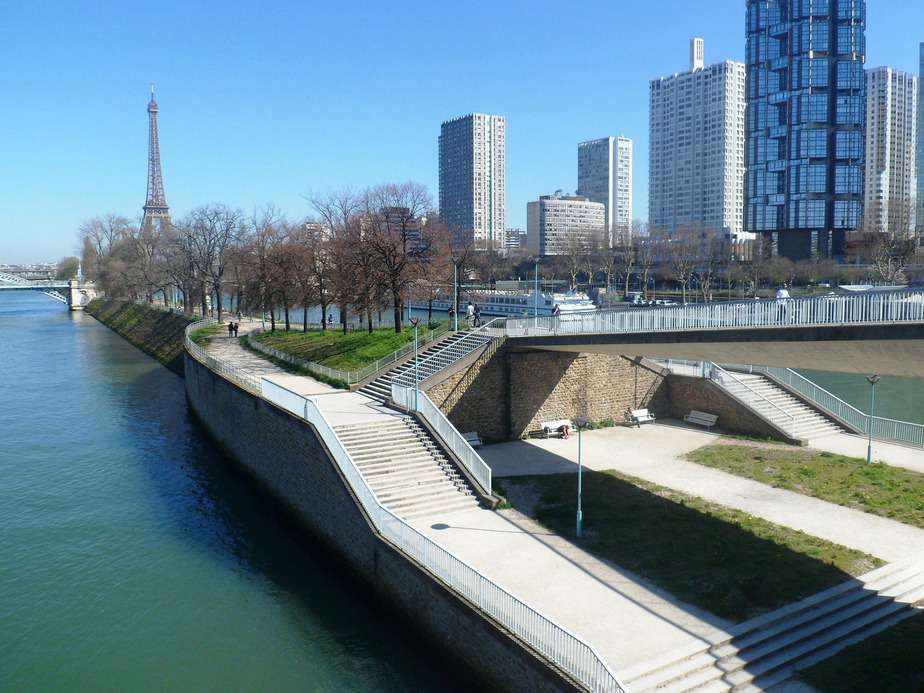
Stretching 900 meters long but only 10 meters wide, Swans Island is best enjoyed as a walking or jogging path. Allée des Cygnes runs the island’s length, offering a quiet escape with spectacular views of the Eiffel Tower.
- Grenelle Bridge & Statue of Liberty: At the island’s eastern end stands a smaller replica of New York’s Statue of Liberty, installed in 1889 for the centenary of the French Revolution. Originally facing east, it was turned westward towards the U.S. in 1937.
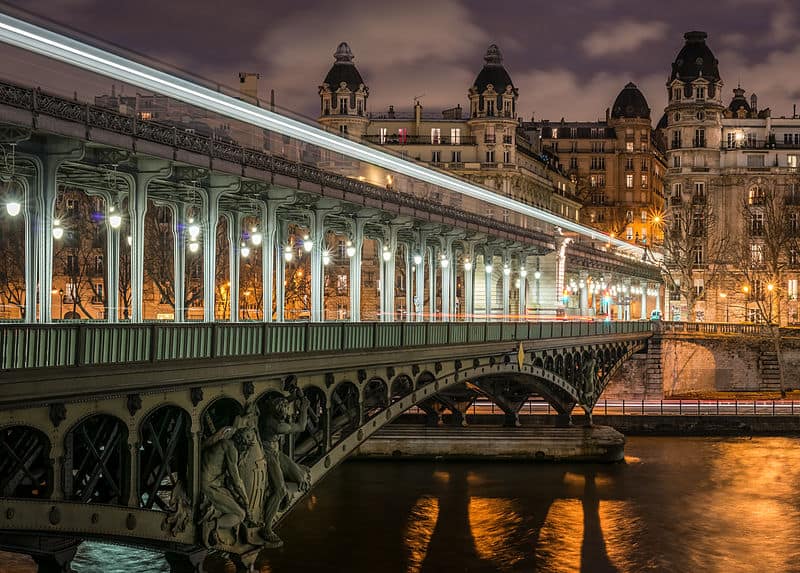
- Bir-Hakeim Bridge: Famous for its double-deck design with symmetrical iron columns, it’s both an architectural landmark and a cinematic backdrop, featured in films like Inception and Mission Impossible: Fallout. The bridge also offers some of the best Eiffel Tower views in Paris.
Final Thoughts
Each island of the Seine tells a different story—Île Saint-Louis exudes quiet elegance, Île de la Cité brims with history, and Île aux Cygnes provides a scenic promenade with modern Parisian charm.
Strolling the riverbanks, from Arsenal Harbor near Bastille to the western tip of Swans Island, reveals an unforgettable panorama of Paris. Whether you’re walking, cruising, or simply pausing at a riverside park, the Seine’s islands are essential stops on any Paris itinerary.